

— Historical Impact and Contemporary Message —
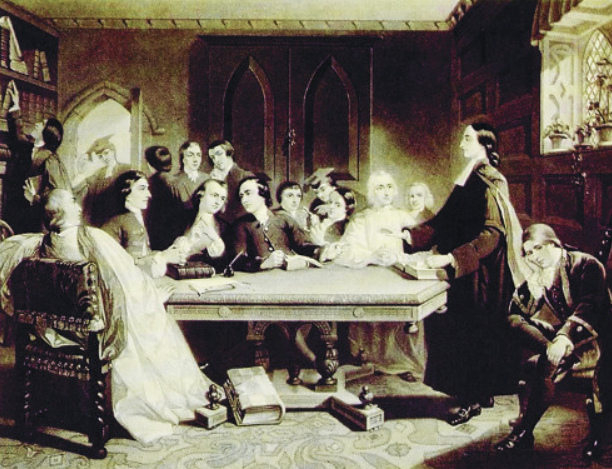
In the winter of 1729, three or four young men quietly gathered in a small study at Lincoln College, Oxford. There was no sign above the door, no patron, no manifesto. They simply read Scripture, prayed together, and examined one another’s faith. Oxford at the time was less a citadel of learning than a place filled with drinking clubs and worldly pleasures. What these earnest young men received in return was mockery. “Holy Club,” “Bible Moths,” “Bible Bigots” — the jeers came freely.
Yet history has proven that this small gathering changed the world. The Holy Club, led by the Wesley brothers, was the very starting point of the movement that would grow into the Methodist Church, which today has 70 million members around the world. And that is not all. George Whitefield, who grew within this fellowship, crossed the Atlantic to become the flame of the Great Awakening that shook the American colonies from end to end, and he is recorded in history as America’s Spiritual Founding Father. A single small study room at Oxford gave simultaneous birth to the Methodist movement in Britain and the spiritual awakening of America.
A Seed Sprouting in Spiritual Wilderness
Early 18th-century England was a period of religious and moral decline, and Oxford was no exception — this ancient institution, founded on religious ideals, was better known for its drinking clubs than its devotional societies. It was against this backdrop that Charles Wesley gathered a small number of serious-minded students in 1729, and John Wesley, returning to Oxford as a Fellow of Lincoln College, took on the leadership of the group.
John Wesley led the group in fasting twice a week, receiving communion regularly, and practicing systematic Bible study and prayer. From 1730, they began visiting Oxford’s prisons — preaching to inmates, teaching them to read, paying their debts, and extending their ministry into social service.
The name “Holy Club” was not one the members chose for themselves; it was bestowed upon them by those who wished to mock them. Yet in time, this language of derision became the name of a great movement. Membership never exceeded 25, and when John Wesley left Oxford in 1735, the group effectively came to an end. Barely six years. Fewer than twenty-five members. And yet the flame this small fellowship left on history spread in three directions.
John and Charles Wesley: The Heart of the British Evangelical Revival
John Wesley applied the discipline and organizational skill forged in the Holy Club directly to his ministry. The practices and discipline of the Holy Club became the model for the bands, classes, and societies of the Methodist revival, and the inspiration for the movement’s social concern. His ministry carried the gospel to Britain’s working poor and miners, and he denounced the slave trade as “the scandal of religion, of England and of human nature,” urging William Wilberforce to “go in the name of God until even American slavery shall vanish away.”
Charles Wesley left behind more than 6,500 hymns over the course of his lifetime, allowing the piety of the Holy Club to flow into the worship language of churches around the world. The balance of love for God and love for neighbor, expressed in the actions of everyday life, was the centerpiece of early Methodism, and continues today.
George Whitefield: America’s Spiritual Founding Father
“In the years prior to the American Revolution, George Whitefield was the most famous man in the colonies.” — Historian Thomas Kidd, Baylor University
Whitefield entered Pembroke College in 1732 and in 1733 was introduced to the Holy Club at the invitation of Charles Wesley, where he began fellowshipping with the group’s ten or eleven earnest members. He was just 18 years old. Within this fellowship, he received from the Wesley brothers a copy of Henry Scougal’s The Life of God in the Soul of Man, through which he came to understand that true Christianity was not outward duty but the union of the soul with God — a truth that would become the central message of his entire ministry.
Whitefield preached at least 18,000 times during his lifetime, bringing the gospel to approximately ten million hearers across the British Empire. He was the first internationally famous itinerant preacher and the first modern transatlantic celebrity of any kind. His innovative preaching style and democratic view of evangelism breathed a new democratic spirit into American religion, life, and politics, and played a significant role in the spiritual, geographic, and political unification of the colonies on the eve of the American Revolution. Scholars assess that “Whitefield was the central figure in the process by which disparate colonists became Americans, prone to think in zealous, adversarial terms about religion, rights, and liberties. Whitefield’s awakening may not have caused the revolution, but it had a profound conditioning influence on Americans as the revolution approached.”
The 18-year-old who had quietly read his Bible in a room of the Holy Club went on to shape the very soul of a nation. This is the history that a faithful community makes.
The Gospel’s Power to Transform Society
Another legacy the Holy Club left behind was social reform. Ministry to the poor and orphans, reform of prisons and treatment of the insane, the literature movement, and the founding of Sunday Schools — all flowed from this revival. The spirit of “faith with works” that began in the Holy Club proved to the world not only the salvation of individuals but the power of the gospel to transform entire societies.
Five Questions for Today’s Believer
This history now puts five sharp questions to those of us living today.
Are we truly living in community?
Many churches today take pride in sanctuaries that seat thousands. But how many of those congregants have relationships in which they genuinely share spiritual accountability? In an age when a smartphone gives access to sermons from around the world, spiritual isolation has paradoxically grown deeper. Wesley had members of his small groups regularly share questions of self-examination — covering prayer habits, attitudes toward others, stewardship of time and resources, and purity of heart — in order to build a culture of mutual support, transparency, and accountability. Are these kinds of questions flowing through our small groups today?
Is our faith changing our lives?
The young men of the Holy Club did not stop at reading Scripture. Their practice of faith included Bible study and prayer, fasting, generous giving, evangelism, and visiting those in need — including prisoners, some of them on death row. Knowledge and life were not separated. Sunday worship flowed into Monday living. “Faith without works is dead” (James 2:17). The Holy Club did not read this verse as a text to study — they lived it.
Are we willing to endure the world’s ridicule?
Attending church on Sunday is considered old-fashioned. Holding to biblical ethics draws accusations of narrow-mindedness. Sharing the gospel with a neighbor is seen as an imposition. The willingness of Holy Club members to endure mockery for their convictions speaks directly to the challenge of Christian witness that believers face today. The fathers of our faith bore the jeers of “Bible Moths” and “fanatics.” What are we enduring today?
Are we afraid of smallness?
The church today is often overwhelmed by numbers — attendance figures, giving totals, social media follower counts become the measure of ministry success. But the history of the Holy Club declares: God does not count numbers. God looks for faithfulness. As Holy Club members graduated and scattered, those who became clergy in the Church of England formed similar groups wherever they went, and George Whitefield, without any grand organization or major sponsorship, stepped onto colonial soil carrying nothing but the faith shaped in the Holy Club — and changed the soul of America. This is how the Kingdom of God expands.
Does our faith have a “method”?
The name “Methodist” was born in mockery — but that mockery contained truth. These young men lived their faith systematically, regularly, and with discipline. The subjects addressed by Wesley’s self-examination questions — prayer habits, attitudes toward others, stewardship of time and resources, and purity of heart — remain a compass pointing toward spiritual maturity across every generation. Zeal without method does not last. Spiritual growth comes to those who faithfully make use of the means of grace.
For Today’s Holy Club
When John Wesley’s father urged him to return home to Epworth, Wesley wrote back:
“I must stay in Oxford. Without the fellowship of this group, my soul is in danger.”
What the greatest preacher of the 18th century confessed his soul required was not a magnificent platform or a vast theological library. It was a small gathering — for Bible reading, for prayer, for sharing spiritual accountability with one another.
In the end, the message the Holy Club sends to Christians of this age converges into a single truth:
It is difficult to become a whole believer alone.
The Holy Club’s integration of personal devotion and social engagement offers a model for holistic Christian living, and remains all the more vital in this age of deepening isolation.
Who is beside you right now? Is there someone — two or three people — who know your soul, who know your weakness, and who are walking with you toward Christ nonetheless? That small gathering can become a Holy Club that changes the world. The flame that gave birth to British Methodism, shaped the soul of America, and laid the spiritual foundation of a revolution — that flame began in exactly such a small room.
“For where two or three gather in my name, there am I with them.” (Matthew 18:20)


