
Introduction: One Preacher Who Changed the World
History often tells us that the world is changed by those who wield the sword. Yet sometimes, history turns on the voice of a single person who wields the Word.
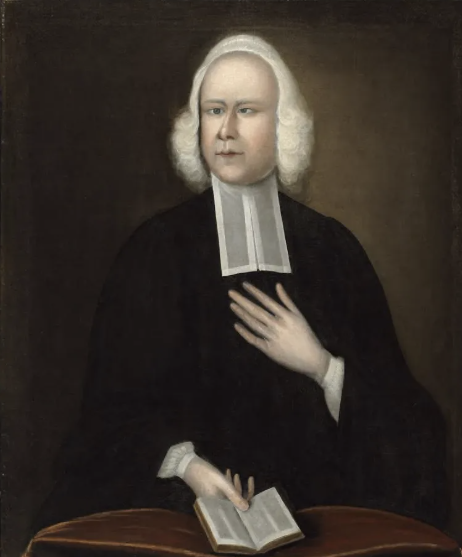
George Whitefield (1714–1770).
He was no king, no general, no philosopher. He was simply a preacher. And yet the souls of millions on both sides of the Atlantic were shaken through his voice, and history was altered wherever he went.
Born in England, crossing the Atlantic thirteen times, traversing England, Scotland, Wales, Ireland, and America — his life refused to be confined to any one nation, any one people, any one denomination. Wherever there were souls, he ran toward them.
His life asks something of us who live in this age:
“Where are you standing right now? And toward whom are you moving?”
1. The Setting: A World Fast Asleep
In the early eighteenth century, the Western world lay in a deep spiritual sleep. In England, millions of laborers swept up in the Industrial Revolution lived beyond the reach of any church. In the American colonies, the passionate faith of the Puritans had cooled with each passing generation. On the European continent, the Enlightenment was enthroning human reason in the place of God.
The church existed, but living faith was hard to find. Chapels stood, but the life of rebirth had grown dim.
It was into this spiritual wasteland that God raised up one man.
In February 1739, a twenty-four-year-old preacher named George Whitefield stood before a group of coal miners in the fields of Kingswood, near Bristol, England. There was no church building. There was no pulpit. He simply stood in an open field. At first, no more than two hundred people gathered. Then he opened his mouth.
The miners began to weep. Tears traced white streaks down faces blackened with coal dust. Whitefield later wrote: “Their tears made white gutters down their coal-dusted cheeks.” Three weeks later, ten thousand people filled that same field. From that day forward, the world began to change.
2. The Preacher Who Took to the Fields
When Whitefield began preaching outdoors, many clergy of the Church of England reacted with fierce opposition. “Preaching outside a church building is beneath dignity,” they said. One by one, churches began closing their pulpits to him.
But Whitefield had no choice. There were people who would never step inside a church building — miners, dock workers, vagabonds, the poor. They were not without souls. They were not without need of the gospel. It was simply that no one had ever gone to where they were.
Whitefield took to the fields. The open ground before a mine, the docks of a harbor, the town square, the open plazas of a city — wherever his feet carried him became his church. Without a microphone, his voice reached tens of thousands. People wept, laughed, fell to their knees, and found their lives transformed.
Even the famous skeptic Benjamin Franklin was initially doubtful. But after hearing Whitefield preach, he walked away from the crowd, measuring how far the voice could carry. Franklin calculated that Whitefield’s voice could reach thirty thousand people in the open air. Though he never became a Christian himself, Franklin became one of Whitefield’s closest friends and gladly assisted in publishing his sermons.
Whitefield’s field preaching was not merely a change of method. It was a theological declaration:
The gospel cannot be kept prisoner inside a building. The gospel must go where the people are.
3. One Voice That United a Divided World
Historians do not celebrate Whitefield simply because he drew large crowds. He brought divided people together.
The church of his day was deeply fractured — by denomination, by nation. Anglicans, Presbyterians, Congregationalists, Baptists, Methodists — each tradition had built its own walls.
Yet before Whitefield’s preaching, those walls came down. Because his message was only ever one:
“We are all equal sinners before God, and we all equally need his grace.”
He left behind a famous word:
“I don’t ask whether you are Anglican, Presbyterian, or Independent. I ask: are you a new creation?” (2 Cor. 5:17)
Equality before God. Equal standing before grace. This declaration crossed the lines of denomination, class, and ethnicity. The Great Awakening began in exactly this way — not a local revival, but the first transnational spiritual awakening to shake both sides of the Atlantic at once.
4. What His Life Shows Us
The age has changed. But the challenge his life throws down remains very much alive.
(1) Step Outside Your Familiar Walls
Those who need the gospel are not only inside the church. They are in our workplaces, our schools, our alleyways, our markets. The ground beneath our feet right now — that is the field.
The eighteenth-century field may today be social media, a lunch break at work, or a neighbor’s front door. What matters is not the location but the courage to move. Whenever a pulpit was closed to Whitefield, he found a wider field.
(2) Unity Across Denominational and Cultural Lines
Whitefield refused to be owned by any one denomination. He called Wesley his brother despite their theological differences, and welcomed pulpits of Presbyterian, Congregationalist, and Baptist churches alike. What he cared about was not the name of the denomination but the life that is found in Christ.
How many walls has today’s church built for itself? Only when we lift the cross of Christ higher than any denominational banner will the world be moved.
(3) Preaching Born on Its Knees
Over thirty-one years of public ministry, Whitefield preached more than eighteen thousand sermons. Adding informal exhortations and small gatherings, some records suggest the total exceeded thirty thousand. His entire life was, in the truest sense, one unbroken sermon.
But the root of every one of those sermons lay in the stillness of the early morning. He rose early and began each day with prayer and the meditation of Scripture. “Before I preach,” he wrote, “I must first engrave the Word upon my heart through prayer.” He wept as he preached, and his congregations wept with him. That was not technique — it was the work of the Holy Spirit. Not one sermon was born that had not first been born on its knees.
5. The Field That Lies Before Us Today
Look at the world today. The ancient cathedrals of Europe have become museums and tourist attractions. In the Western societies that were once the heartland of Christian civilization, young people are leaving the church at a rapid pace. In Britain, more churches close every week than open. In America, the proportion of young people identifying as having “no religion” has reached an all-time high. In parts of Asia, Africa, and Latin America, churches may be growing in numbers, but prosperity theology and emotional fervor too often fill the space where deep roots of faith should be.
Wherever you go, the landscape looks familiar. Religion in form, but faith that has gone dim. Buildings, but no visible life.
That is precisely the picture of the eighteenth century in which Whitefield lived.
In that age, God raised up one man. That man walked into the open field and cried out:
“You must become a new creation! You must be born again!”
What we must practice in this age is exactly this:
“Let me first experience the grace of true repentance and new birth — and then let that grace flow out beyond the walls of my own life.”
The church must first come alive. The individual must first fall to their knees. And then each of us must walk toward our own field — from wherever we stand, in whatever language we speak, beginning now.
Closing: The Thunder of Heaven Can Sound Again
George Whitefield died on September 30, 1770, in Newburyport, Massachusetts, at the age of fifty-five. The day before, he had stood in an open field in Exeter, New Hampshire, and preached for two hours in what would be his final outdoor sermon. His body was already failing, and someone said to him, “You are more fit for bed than for preaching.” He looked upward and prayed: “Lord Jesus, I am weary in your work, but not of your work.” And then he preached. After the sermon, he rode on horseback to Newburyport, and as he climbed the stairs of his lodging, he could not help but turn to the friends who had gathered, and speak the Word to them once more — until the candle in his hand had burned all the way down to the socket. The following morning, he did not open his eyes.
His life itself was a sermon.
Today — wherever you kneel, in whatever language you pray — we must stand before this question again:
Are we on our knees for the spiritual awakening of this age? Are we ready to step outside the walls we have grown comfortable within?
The thunder of heaven can sound again. That sound has always begun with one person on their knees.


