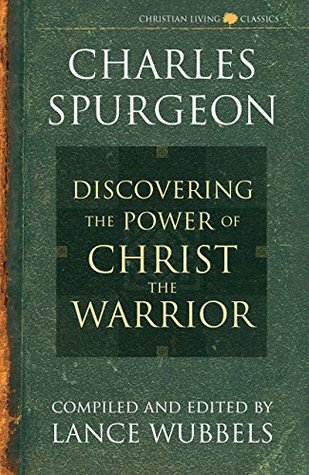
Long before the megachurch, nearly 6,000 people crowded every service to hear Charles Spurgeon. Billy Graham has wonderfully described Charles Spurgeon as a preacher who extolled Jesus Christ -- everlasting! Yet he related his message to the practical needs of his listeners. It is little wonder that no building seemed big enough to house all those who wanted to hear Spurgeon preach.
Spurgeon particularly loved to extol Jesus Christ as the Almighty Warrior who has conquered every spiritual foe and who reigns as King over every realm in heaven, earth, and hell.
How powerfully he speaks of the authority with which Christ takes the keys of death and hell, of Christ as the liberator of believers from the power of sin, of Christ as the destroyer of Satan and death, of Christ as the mighty Savior who omnipotently leads His Church, of Christ as the Lamb of Revelation who takes the sealed book and opens the secrets of God, and of Christ the rider of the white horse who will return to earth to set up His eternal kingdom.



C.H. Spurgeon (1834 - 1892)
Spurgeon quickly became known as one of the most influential preachers of his time. Well known for his biblical powerful expositions of scripture and oratory ability. In modern evangelical circles he is stated to be the "Prince of Preachers." He pastored the Metropolitan Tabernacle in downtown London, England.His church was part of a particular baptist church movement and they defended and preached Christ and Him crucified and the purity of the Gospel message. Spurgeon never gave altar calls but always extended the invitation to come to Christ. He was a faithful minister in his time that glorified God and brought many to the living Christ.
Charles Haddon Spurgeon was England's best-known preacher for most of the second half of the nineteenth century. In 1854, just four years after his conversion, Spurgeon, then only 20, became pastor of London's famed New Park Street Church (formerly pastored by the famous Baptist theologian John Gill).
The congregation quickly outgrew their building, moved to Exeter Hall, then to Surrey Music Hall. In these venues Spurgeon frequently preached to audiences numbering more than 10,000 - all in the days before electronic amplification.
In 1861 the congregation moved permanently to the new Metropolitan Tabernacle.
... Show more