
- Bible
- Read the Bible
- Bible Versions
- Verse of the Day
- Reading Plans
- Verses by Topic
- Books of the Bible
- Bible Images
- Study
- Commentaries
- Concordances
- Dictionaries
- Encyclopedias
- Sermons
- Bible Atlas & Maps
- BP Wiki
- Devotionals
- Today's Devotionals
- Light of the World
- All Devotionals
- Inspirational Quotes
- More
- Picture Quotes
- Videos
- Inspirational
- Bible Study
- What The Bible Says
- Bible Q&As
- Daily Bread
- Bible by Genre
- Bible Stories
- Random Bible Verse
- Community
- Store
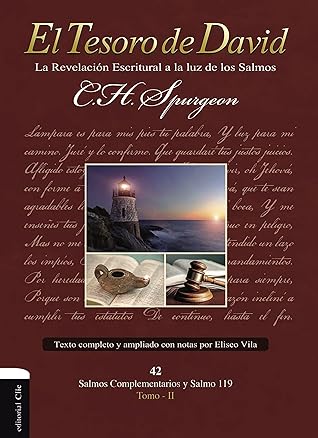
El gran predicador y expositor bíblico C. H. Spurgeon dedicó buena parte de su vida a completar su magnum opusmagnum opus, un macrocomentario al libro de lo salmos que tituló “El Tesoro de David”. Su valor radica en que Spurgeon no tan solo aporta en el mismo su propia exposición versículo por versículo de cada salmo, sino incluye los mejores comentarios sobre cada versículo por los Padres de la Iglesia, Reformadores y, demanera especial, los autores puritanos, hasta llegar a los comentaristas contemporáneos suyos. Es decir, en El Tesoro de David Spurgeon seleccionó bajo su criterio los mejores extractos de renombrados comentaristas sobre cada salmo desde el Siglo II hasta finales del Siglo XIX.
En el año 2015 salió el Volumen I de esta obra extraordinaria, y ahora el Volumen II,
El gran valor añadido es la extraordinaria y amplia estructura de la obra:
Más de 18.000 exposiciones a los Salmos.
Más de 1650 expositores y comentaristas.
Más de 20.000 referencias bíblicas enlazadas
Más de 500 personajes históricos citados.
Cometarios de los Padres de la Iglesia.
7 versiones de la Biblia en español.
Versión poética de cada Salmo.
Texto hebreo y texto de la Septuaginta.
Vulgata, Biblia de Ferrara, y Peshitta.
Notas filológicas y exegéticas.
Notas históricas y explicativas.
Índice de expositores y comentaristas.
Índice de personajes históricos citados.
Índice de textos bíblicos conectados.
Índice analítico: +200 temas y +6000 entradas.
The Treasury of David IIThe Treasury of David II
The great preacher and biblical expository preacher C. H. Spurgeon devoted a good part of his life to completing his magnum opusmagnum opus, a macro-commentary on the book of Psalms he titled "The Treasure of David." Its value lies in the fact that Spurgeon not only brings in it his own exposition verse by verse of each psalm, but also includes the best comments on each verse by the Church Fathers, Reformers, and, especially, the Puritan authors; even reaching his contemporary commentators. That is, in The Treasure of David,The Treasure of David, Spurgeon selected the best excerpts from renowned commentators on each psalm from the second century until the end of the 19th century.
The full text of the original work of C. H. Spurgeon is translated into a language that maintains its literary beauty, but also in a current and affordable language to the forms of communication of today's society. Above scientific rigor, dynamic translation has been prioritized.
As if Spurgeon and other authors preached today from a pulpit in the Spanish language: elegant, cultured, poetic, resounding, shocking, but at the same time understandable.
The great added value is the extraordinary and wide structure of the work:
More than 18,000 exposures to the Psalms.
More than 1650 exhibitors and commentators.
More than 20,000 linked Biblical references
More than 500 cited historical figures.
Comments from the Fathers of the Church.
7 versions of the Bible in Spanish.
Poetic version of each Psalm.
Hebrew text and Septuagint text.
Vulgate, Ferrara Bible, and Peshitta.
Philological and exegetical notes.
Historical and explanatory notes.
Index of exhibitors and commentators.
Index of cited historical figures.
Index of connected biblical texts.
Analytical index: +200 topics and +6000 entries.
En el año 2015 salió el Volumen I de esta obra extraordinaria, y ahora el Volumen II,
El gran valor añadido es la extraordinaria y amplia estructura de la obra:
Más de 18.000 exposiciones a los Salmos.
Más de 1650 expositores y comentaristas.
Más de 20.000 referencias bíblicas enlazadas
Más de 500 personajes históricos citados.
Cometarios de los Padres de la Iglesia.
7 versiones de la Biblia en español.
Versión poética de cada Salmo.
Texto hebreo y texto de la Septuaginta.
Vulgata, Biblia de Ferrara, y Peshitta.
Notas filológicas y exegéticas.
Notas históricas y explicativas.
Índice de expositores y comentaristas.
Índice de personajes históricos citados.
Índice de textos bíblicos conectados.
Índice analítico: +200 temas y +6000 entradas.
The Treasury of David IIThe Treasury of David II
The great preacher and biblical expository preacher C. H. Spurgeon devoted a good part of his life to completing his magnum opusmagnum opus, a macro-commentary on the book of Psalms he titled "The Treasure of David." Its value lies in the fact that Spurgeon not only brings in it his own exposition verse by verse of each psalm, but also includes the best comments on each verse by the Church Fathers, Reformers, and, especially, the Puritan authors; even reaching his contemporary commentators. That is, in The Treasure of David,The Treasure of David, Spurgeon selected the best excerpts from renowned commentators on each psalm from the second century until the end of the 19th century.
The full text of the original work of C. H. Spurgeon is translated into a language that maintains its literary beauty, but also in a current and affordable language to the forms of communication of today's society. Above scientific rigor, dynamic translation has been prioritized.
As if Spurgeon and other authors preached today from a pulpit in the Spanish language: elegant, cultured, poetic, resounding, shocking, but at the same time understandable.
The great added value is the extraordinary and wide structure of the work:
More than 18,000 exposures to the Psalms.
More than 1650 exhibitors and commentators.
More than 20,000 linked Biblical references
More than 500 cited historical figures.
Comments from the Fathers of the Church.
7 versions of the Bible in Spanish.
Poetic version of each Psalm.
Hebrew text and Septuagint text.
Vulgate, Ferrara Bible, and Peshitta.
Philological and exegetical notes.
Historical and explanatory notes.
Index of exhibitors and commentators.
Index of cited historical figures.
Index of connected biblical texts.
Analytical index: +200 topics and +6000 entries.
Hardcover, 2496 pages
Published October 27th 2020 by CLIE
Subscribe
Get Bible verse every day in your inbox
Read on Mobile


Group of Brands


© 2026 Bibleportal.com All rights reserved.
C.H. Spurgeon (1834 - 1892)
Spurgeon quickly became known as one of the most influential preachers of his time. Well known for his biblical powerful expositions of scripture and oratory ability. In modern evangelical circles he is stated to be the "Prince of Preachers." He pastored the Metropolitan Tabernacle in downtown London, England.His church was part of a particular baptist church movement and they defended and preached Christ and Him crucified and the purity of the Gospel message. Spurgeon never gave altar calls but always extended the invitation to come to Christ. He was a faithful minister in his time that glorified God and brought many to the living Christ.
Charles Haddon Spurgeon was England's best-known preacher for most of the second half of the nineteenth century. In 1854, just four years after his conversion, Spurgeon, then only 20, became pastor of London's famed New Park Street Church (formerly pastored by the famous Baptist theologian John Gill).
The congregation quickly outgrew their building, moved to Exeter Hall, then to Surrey Music Hall. In these venues Spurgeon frequently preached to audiences numbering more than 10,000 - all in the days before electronic amplification.
In 1861 the congregation moved permanently to the new Metropolitan Tabernacle.
... Show more