Quanto mais se lê e estuda Spurgeon, tanto mais se enche de admiração por este “pregador dos tempos”.
Spurgeon, talvez o maior pregador do século XIX, mestre da palavra falada e escrita, tinha apenas um propósito na vida: pregar Cristo em toda a sua glória e poder. Seu estilo literário recebeu influência direta de John Bunyan, autor de O Peregrino.
Os dois livros trazem aproximadamente 300 esboços de sermões e quase 500 ilustrações selecionadas. Destinam-se a ministros, missionários e professores da Bíblia que precisam de uma centelha, uma vez ou outra, para fazer o fogo arder e brilhar com novo calor e poder.
FICHA TÉCNICA
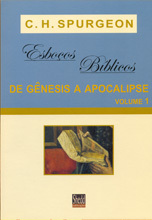
Título: Esboços bíblicos - de Gênesis a Apocalipse - Volume 1
Código: 11768
Autor: C. H. Spurgeon
Editora: Shedd Publicações
Formato: 16 x 23 cm
Páginas: 352
Peso: 485 g.
Acabamento: Brochura
ISBN: 85-88315-12-2
Categorias: Homilética - Ministério Pastoral
Edição: 2002



C.H. Spurgeon (1834 - 1892)
Spurgeon quickly became known as one of the most influential preachers of his time. Well known for his biblical powerful expositions of scripture and oratory ability. In modern evangelical circles he is stated to be the "Prince of Preachers." He pastored the Metropolitan Tabernacle in downtown London, England.His church was part of a particular baptist church movement and they defended and preached Christ and Him crucified and the purity of the Gospel message. Spurgeon never gave altar calls but always extended the invitation to come to Christ. He was a faithful minister in his time that glorified God and brought many to the living Christ.
Charles Haddon Spurgeon was England's best-known preacher for most of the second half of the nineteenth century. In 1854, just four years after his conversion, Spurgeon, then only 20, became pastor of London's famed New Park Street Church (formerly pastored by the famous Baptist theologian John Gill).
The congregation quickly outgrew their building, moved to Exeter Hall, then to Surrey Music Hall. In these venues Spurgeon frequently preached to audiences numbering more than 10,000 - all in the days before electronic amplification.
In 1861 the congregation moved permanently to the new Metropolitan Tabernacle.
... Show more