
- Bible
- Read the Bible
- Bible Versions
- Verse of the Day
- Reading Plans
- Verses by Topic
- Books of the Bible
- Bible Images
- Study
- Commentaries
- Concordances
- Dictionaries
- Encyclopedias
- Sermons
- Bible Atlas & Maps
- BP Wiki
- Devotionals
- Today's Devotionals
- Light of the World
- All Devotionals
- Inspirational Quotes
- More
- Picture Quotes
- Videos
- Inspirational
- Bible Study
- What The Bible Says
- Bible Q&As
- Daily Bread
- Bible by Genre
- Bible Stories
- Random Bible Verse
- Community
- Store
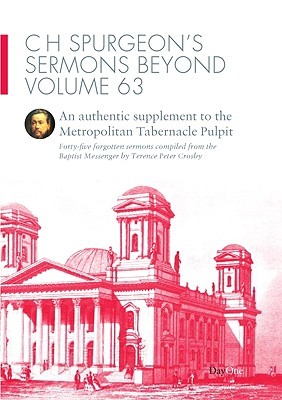
Sermons Beyond Volume 63: An Authentic Supplement to the Metropolitan Tabernacle Pulpit
Here are forty-five sermons which were awaiting publication in the Metropolitan Tabernacle Pulpit when it came to an abrupt end in 1917. The sixty-three volumes and 3,563 sermons of Spurgeon's New Park Street and Metropolitan Tabernacle pulpits were a remarkable achievement, and it was only on account of the shortage of paper and metal caused by the First World War that publication ceased on 10 May 1917.
Here are forty-five sermons which were awaiting publication in the Metropolitan Tabernacle Pulpit when it came to an abrupt end in 1917. The sixty-three volumes and 3,563 sermons of Spurgeon's New Park Street and Metropolitan Tabernacle pulpits were a remarkable achievement, and it was only on account of the shortage of paper and metal caused by the First World War that publication ceased on 10 May 1917.Many hundreds of sermons were ready and waiting for their weekly publication, and notices in the last two sermons indicated that it was the intention to resume publication once peace had been restored. However, only twenty hitherto unpublished sermons were to appear in 1922 in a volume entitled Able to the Uttermost.
Many hundreds of sermons were ready and waiting for their weekly publication, and notices in the last two sermons indicated that it was the intention to resume publication once peace had been restored. However, only twenty hitherto unpublished sermons were to appear in 1922 in a volume entitled Able to the Uttermost.This volume brings to light the sermons which probably would have appeared in the remainder of Volume 63 and at the start of Volume 64 of the Metropolitan Tabernacle Pulpit, sermons which originally appeared only in magazine format from 1877 to 1881.
This volume brings to light the sermons which probably would have appeared in the remainder of Volume 63 and at the start of Volume 64 of the Metropolitan Tabernacle Pulpit, sermons which originally appeared only in magazine format from 1877 to 1881.BUY NOW
Published September 14th 2009 by Day One Publications
Get Bible verse every day in your inbox
Read on Mobile


Group of Brands


C.H. Spurgeon (1834 - 1892)
Spurgeon quickly became known as one of the most influential preachers of his time. Well known for his biblical powerful expositions of scripture and oratory ability. In modern evangelical circles he is stated to be the "Prince of Preachers." He pastored the Metropolitan Tabernacle in downtown London, England.His church was part of a particular baptist church movement and they defended and preached Christ and Him crucified and the purity of the Gospel message. Spurgeon never gave altar calls but always extended the invitation to come to Christ. He was a faithful minister in his time that glorified God and brought many to the living Christ.
Charles Haddon Spurgeon was England's best-known preacher for most of the second half of the nineteenth century. In 1854, just four years after his conversion, Spurgeon, then only 20, became pastor of London's famed New Park Street Church (formerly pastored by the famous Baptist theologian John Gill).
The congregation quickly outgrew their building, moved to Exeter Hall, then to Surrey Music Hall. In these venues Spurgeon frequently preached to audiences numbering more than 10,000 - all in the days before electronic amplification.
In 1861 the congregation moved permanently to the new Metropolitan Tabernacle.
... Show more