
- Bible
- Read the Bible
- Bible Versions
- Verse of the Day
- Reading Plans
- Verses by Topic
- Books of the Bible
- Bible Images
- Study
- Commentaries
- Concordances
- Dictionaries
- Encyclopedias
- Sermons
- Bible Atlas & Maps
- BP Wiki
- Devotionals
- Today's Devotionals
- Light of the World
- All Devotionals
- Inspirational Quotes
- More
- Picture Quotes
- Videos
- Inspirational
- Bible Study
- What The Bible Says
- Bible Q&As
- Daily Bread
- Bible by Genre
- Bible Stories
- Random Bible Verse
- Community
- Store
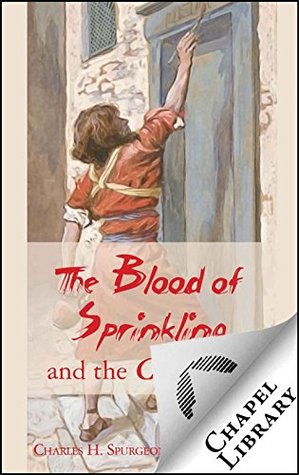
The Blood of Sprinkling and the Children
by C.H. Spurgeon
Another quality eBook from Chapel Library.
The Paschal lamb was a special type of our Lord Jesus Christ. We are not left to gather this from the general fact that all the ancient sacrifices were shadows of the one true and real substance; but we are assured in the New Testament that “Christ our passover is sacrificed for us” (1Co 5:7). As the Paschal lamb must be without blemish, so was our Lord, and its killing and roasting with fire were typical of His death and sufferings. Even as to time, our Lord fulfilled the type, for the time of His crucifixion was the passover. As the impression answers to the seal, so does the sacrifice of our Lord correspond with all the items of the passover ceremonial. We see Him “drawn out” from among men, and led as a lamb to the slaughter; we see His blood shed and sprinkled; we see Him roasted in the fire of anguish; by faith we eat of Him, and flavour the feast with the bitter herbs of penitence. We see Jesus and salvation where the carnal eye sees only a slaughtered lamb, and a people saved from death.
The Spirit of God in the passover ceremonial lays special emphasis upon the sprinkling of the blood. That which men so greatly oppose, He as diligently sets forth as the head and front of revelation. The blood of the chosen lamb was caught in a basin, and not spilled upon the ground in wastefulness; for the blood of Christ is most precious. Into this bowl of blood a bunch of hyssop was dipped. The sprays of that little shrub would hold the crimson drops, so that they could be easily sprinkled. Then the father of the family went outside, and struck with this hyssop the lintel and the two side posts of the door, and so the house was marked with three crimson streaks. No blood was put upon the threshold. Woe unto the man that tramples upon the blood of Christ, and treats it as an unholy thing! Alas! I fear that many are doing so at this hour, not only among the outside world, but among those who profess and call themselves Christians.
I shall endeavor to bring forward two things. First, the importance attached to the sprinkled blood; and, secondly, the institution connected with it, namely, that the children should be instructed in the meaning of sacrifice, so that they also may teach their children, and keep afire the memory of the Lord’s great deliverance…
The Paschal lamb was a special type of our Lord Jesus Christ. We are not left to gather this from the general fact that all the ancient sacrifices were shadows of the one true and real substance; but we are assured in the New Testament that “Christ our passover is sacrificed for us” (1Co 5:7). As the Paschal lamb must be without blemish, so was our Lord, and its killing and roasting with fire were typical of His death and sufferings. Even as to time, our Lord fulfilled the type, for the time of His crucifixion was the passover. As the impression answers to the seal, so does the sacrifice of our Lord correspond with all the items of the passover ceremonial. We see Him “drawn out” from among men, and led as a lamb to the slaughter; we see His blood shed and sprinkled; we see Him roasted in the fire of anguish; by faith we eat of Him, and flavour the feast with the bitter herbs of penitence. We see Jesus and salvation where the carnal eye sees only a slaughtered lamb, and a people saved from death.
The Spirit of God in the passover ceremonial lays special emphasis upon the sprinkling of the blood. That which men so greatly oppose, He as diligently sets forth as the head and front of revelation. The blood of the chosen lamb was caught in a basin, and not spilled upon the ground in wastefulness; for the blood of Christ is most precious. Into this bowl of blood a bunch of hyssop was dipped. The sprays of that little shrub would hold the crimson drops, so that they could be easily sprinkled. Then the father of the family went outside, and struck with this hyssop the lintel and the two side posts of the door, and so the house was marked with three crimson streaks. No blood was put upon the threshold. Woe unto the man that tramples upon the blood of Christ, and treats it as an unholy thing! Alas! I fear that many are doing so at this hour, not only among the outside world, but among those who profess and call themselves Christians.
I shall endeavor to bring forward two things. First, the importance attached to the sprinkled blood; and, secondly, the institution connected with it, namely, that the children should be instructed in the meaning of sacrifice, so that they also may teach their children, and keep afire the memory of the Lord’s great deliverance…
BUY NOW
Kindle Edition, 22 pages
Published September 14th 2014 by Chapel LIbrary
Subscribe
Get Bible verse every day in your inbox
Read on Mobile


Group of Brands


© 2026 Bibleportal.com All rights reserved.
C.H. Spurgeon (1834 - 1892)
Spurgeon quickly became known as one of the most influential preachers of his time. Well known for his biblical powerful expositions of scripture and oratory ability. In modern evangelical circles he is stated to be the "Prince of Preachers." He pastored the Metropolitan Tabernacle in downtown London, England.His church was part of a particular baptist church movement and they defended and preached Christ and Him crucified and the purity of the Gospel message. Spurgeon never gave altar calls but always extended the invitation to come to Christ. He was a faithful minister in his time that glorified God and brought many to the living Christ.
Charles Haddon Spurgeon was England's best-known preacher for most of the second half of the nineteenth century. In 1854, just four years after his conversion, Spurgeon, then only 20, became pastor of London's famed New Park Street Church (formerly pastored by the famous Baptist theologian John Gill).
The congregation quickly outgrew their building, moved to Exeter Hall, then to Surrey Music Hall. In these venues Spurgeon frequently preached to audiences numbering more than 10,000 - all in the days before electronic amplification.
In 1861 the congregation moved permanently to the new Metropolitan Tabernacle.
... Show more