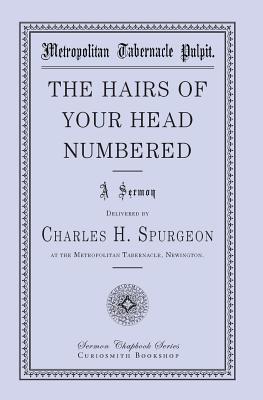
Spurgeon explores four different topics that pertain to Matthew 10:30: "But the very hairs of your head are all numbered." God's providence guided by divine foresight; His knowledge of every intimate detail of life; His valuation of everyday people that gives them great worth; and His preservation to eternal life so that no harm can befall a believer. These promises help to encourage believers and bring a valuable reassurance of God's special love. The sermon was updated to modern language. Quote: "If even the very hairs of our head are all numbered, if everything be really ordained of the Most High concerning His people, let us rejoice in the divine appointment, and take it as it comes, and praise His name, whether our allotment be rough or smooth, bitter or sweet."



C.H. Spurgeon (1834 - 1892)
Spurgeon quickly became known as one of the most influential preachers of his time. Well known for his biblical powerful expositions of scripture and oratory ability. In modern evangelical circles he is stated to be the "Prince of Preachers." He pastored the Metropolitan Tabernacle in downtown London, England.His church was part of a particular baptist church movement and they defended and preached Christ and Him crucified and the purity of the Gospel message. Spurgeon never gave altar calls but always extended the invitation to come to Christ. He was a faithful minister in his time that glorified God and brought many to the living Christ.
Charles Haddon Spurgeon was England's best-known preacher for most of the second half of the nineteenth century. In 1854, just four years after his conversion, Spurgeon, then only 20, became pastor of London's famed New Park Street Church (formerly pastored by the famous Baptist theologian John Gill).
The congregation quickly outgrew their building, moved to Exeter Hall, then to Surrey Music Hall. In these venues Spurgeon frequently preached to audiences numbering more than 10,000 - all in the days before electronic amplification.
In 1861 the congregation moved permanently to the new Metropolitan Tabernacle.
... Show more