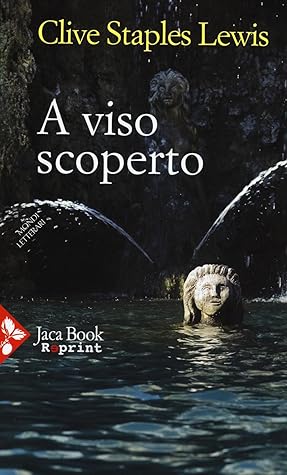
"A viso scoperto" è una reinterpretazione del mito di Amore e Psiche. Se la fonte della storia è dichiaratamente l'allegoria antica, il racconto risulta molto differente. Ci troviamo in un clima lontano dalle grandi civiltà classiche, in un luogo rintracciabile forse in Turchia, forse vicino al Mar Rosso, in un'epoca situabile tra la morte di Socrate e la nascita di Cristo. Un monarca brutale e incompetente regna su un rozzo palazzo e ha tre figlie: Orual, la donna guerriero dall'orribile viso, Redival e Psiche. È un mondo in attesa, in transizione, dove un vecchio ordine spirituale sta morendo e uno nuovo sta per prendere il suo posto. È il mondo in cui si apre un intricata vicenda: avvenimenti politici e militari, una carestia, un sacrificio, amori, invidie, pentimenti. Abbondano sogni e visioni, vengono aperti trabocchetti, che trasportano verso archetipi situati nel profondo. In questo libro, che Lewis stesso considera la sua migliore opera narrativa, egli ha creato dei personaggi multidimensionali, misti di bene e di male in proporzioni sempre diverse, come dei reali esseri umani.



Clive Staples Lewis was born in Ireland, in Belfast on 29 November 1898. His mother was a devout Christian and made efforts to influence his beliefs. When she died in his early youth her influence waned and Lewis was subject to the musings and mutterings of his friends who were decidedly agnostic and atheistic. It would not be until later, in a moment of clear rationality that he first came to a belief in God and later became a Christian.
C. S. Lewis volunteered for the army in 1917 and was wounded in the trenches in World War I. After the war, he attended university at Oxford. Soon, he found himself on the faculty of Magdalen College where he taught Mediaeval and Renaissance English.
Throughout his academic career he wrote clearly on the topic of religion. His most famous works include the Screwtape Letters and the Chronicles of Narnia. The atmosphere at Oxford and Cambridge tended to skepticism. Lewis used this skepticism as a foil. He intelligently saw Christianity as a necessary fact that could be seen clearly in science.
"Surprised by Joy" is Lewis's autobiography chronicling his reluctant conversion from atheism to Christianity in 1931.
... Show more