There are certain great events and critical seasons in history, on which we see that a great deal depends. We find their consequences running out in all directions, and still in activity hundreds of years afterwards. The Reformation is one of these mighty events. We may go along the course of English history calm and unmoved, getting, so dull are we, very often little or no religion out of it. But when we come to the Reformation, it is like the burning bush in the wilderness: the most thoughtless are constrained to turn out of their way to see this great thing.

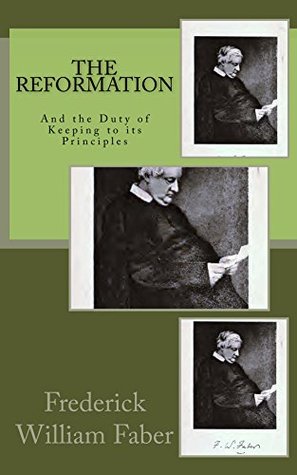


Frederick William Faber, British hymn writer and theologian, was born at Calverley, Yorkshire, where his grandfather, Thomas Faber, was vicar.
In January 1837, he was elected fellow of National Scholars Foundation. Meanwhile, he had given up the Calvinistic views of his youth, and had become an enthusiastic follower of John Henry Newman.
He accepted the rectory of Elton in Huntingdonshire, but soon after went again to the continent, in order to study the methods of the Roman Catholic Church. After a prolonged mental struggle, he joined the Catholic Church in November 1845.
Faber published a number of prose works, and three volumes of hymns, among the most well known is Faith of Our Fathers.
... Show more