
- Bible
- Read the Bible
- Bible Versions
- Verse of the Day
- Reading Plans
- Verses by Topic
- Books of the Bible
- Bible Images
- Study
- Commentaries
- Concordances
- Dictionaries
- Encyclopedias
- Sermons
- Bible Atlas & Maps
- BP Wiki
- Devotionals
- Today's Devotionals
- Light of the World
- All Devotionals
- Inspirational Quotes
- More
- Picture Quotes
- Videos
- Inspirational
- Bible Study
- What The Bible Says
- Bible Q&As
- Daily Bread
- Bible by Genre
- Bible Stories
- Random Bible Verse
- Community
- Store
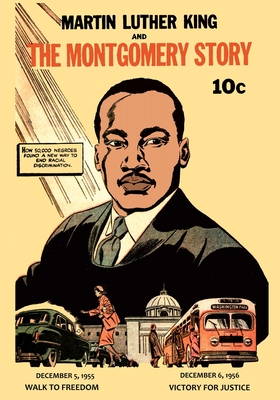
Martin Luther King and the Montgomery Story
by Martin Luther King, Jr.
2021 Reprint of the 1957 Comic Book. Full Color facsimile of the original edition and not reproduced with Optical Recognition Software. Martin Luther King and the Montgomery StoryMartin Luther King and the Montgomery Story is a 16-page comic book about Martin Luther King Jr., Rosa Parks, and the Montgomery bus boycott published in 1957 by the Fellowship of Reconciliation. It advocates the principles of nonviolence and provides a primer on nonviolent resistance. Although ignored by the mainstream comics industry, The Montgomery StoryThe Montgomery Story, written by Alfred Hassler and Benton Resnik and illustrated by Sy Barry, was widely distributed among civil rights groups, churches, and schools. It helped inspire nonviolent protest movements around the Southern United States, and later in Latin America, South Africa, the Middle East, and elsewhere. Over 50 years after its initial publication, the comic inspired the best-selling, award-winning MarchMarch trilogy by Georgia Congressman John Lewis. The comic opens with a one-page synopsis of Martin Luther King Jr.'s life and education up until 1957. The narrative then shifts to Montgomery, Alabama, in 1954. An African American man named Jones tells of life in Montgomery under Jim Crow laws. He describes the events of the Montgomery bus boycott and the important role played by Rosa Parks and Martin Luther King Jr. In the story, King advocates nonviolence, even when his own home is bombed during the boycott. The last section of the comic discusses the "Montgomery Method" of nonviolence, its roots in the activism of Mahatma Gandhi, and provides practical advice on how to pursue nonviolent activism.
Paperback, 20 pages
Published March 1st 2021 by Martino Fine Books
Subscribe
Get Bible verse every day in your inbox
Read on Mobile


Group of Brands


© 2026 Bibleportal.com All rights reserved.
1929-1968
Martin Luther King, Jr. was an American clergyman, activist and prominent leader in the African-American civil rights movement. His main legacy was to secure progress on civil rights in the United States and he is frequently referenced as a human rights icon today.
A Baptist minister, King became a civil rights activist early in his career. He led the 1955 Montgomery Bus Boycott and helped found the Southern Christian Leadership Conference in 1957, serving as its first president. King's efforts led to the 1963 March on Washington, where King delivered his "I Have a Dream" speech. There, he raised public consciousness of the civil rights movement and established himself as one of the greatest orators in U.S. history.
King's main legacy was to secure progress on civil rights in the United States, which has enabled more Americans to reach their potential.
... Show more