
- Bible
- Read the Bible
- Bible Versions
- Verse of the Day
- Reading Plans
- Verses by Topic
- Books of the Bible
- Bible Images
- Study
- Commentaries
- Concordances
- Dictionaries
- Encyclopedias
- Sermons
- Bible Atlas & Maps
- BP Wiki
- Devotionals
- Today's Devotionals
- All Devotionals
- Inspirational Quotes
- More
- Picture Quotes
- Videos
- Inspirational
- Bible Study
- What The Bible Says
- Bible Q&As
- Daily Bread
- Bible by Genre
- Bible Stories
- Random Bible Verse
- Community
- Store
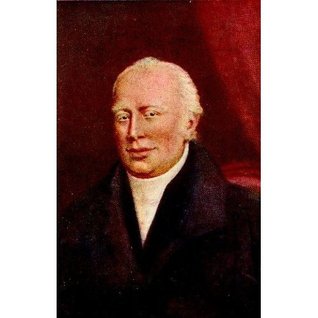
A Letter To A Preacher
by Adam Clarke
This letter, in miniature, was originally drawn up for the use of a young man in London, (Mr. Samuel Woolmer,) who, in the year 1797, gave up some flattering worldly prospects for the privilege of proclaiming the gospel of the grace of God, as an itinerant Wesleyan Methodist preacher; and who has since that time labored in his Master's vineyard with credit and success.
Some judicious friends who saw the plan urged the author to fill it up, and publish it; as something of that kind was much wanted, and was likely to be very useful both to the junior preachers and to the people. Submitting more to their judgment than his own, the work was accordingly sent to press, for the first time, in 1800. It shortly after went through a second edition; and that having been for a considerable time out of print, a third edition has been repeatedly required; and now a fourth.
In revising this work for another impression, many improvements suggested themselves, which were accordingly adopted; and several considerable additions have been made of subjects not less important than those previously introduced, which it is hoped will make the work more generally useful.
Many may be of opinion that the work might be still farther enlarged, with great advantage to the main subject. Of this the author is sufficiently aware; but as he intended no more originally than a letter, and not a labored dissertation on the Christian ministry, or any subject connected with it, he wishes still to keep within the reasonable bounds of his original plan.
Without the author's knowledge, two foreign editions of this letter have been published, one in the sister kingdom, and another in America: with what correctness the author knows not, as he has not read them. He is glad, however, to find, from the general report of his brethren at borne, that this work has not only met with their approbation, but has been very generally useful: and he hopes that in its present improved state it will be still more extensively so. This is the sole end at which he has aimed; and for the good that has been done by it, he cheerfully gives the glory to that God from whom all good comes; and to whom alone all praise and thanksgiving are due.
Millbrook, January 1, 1819
Some judicious friends who saw the plan urged the author to fill it up, and publish it; as something of that kind was much wanted, and was likely to be very useful both to the junior preachers and to the people. Submitting more to their judgment than his own, the work was accordingly sent to press, for the first time, in 1800. It shortly after went through a second edition; and that having been for a considerable time out of print, a third edition has been repeatedly required; and now a fourth.
In revising this work for another impression, many improvements suggested themselves, which were accordingly adopted; and several considerable additions have been made of subjects not less important than those previously introduced, which it is hoped will make the work more generally useful.
Many may be of opinion that the work might be still farther enlarged, with great advantage to the main subject. Of this the author is sufficiently aware; but as he intended no more originally than a letter, and not a labored dissertation on the Christian ministry, or any subject connected with it, he wishes still to keep within the reasonable bounds of his original plan.
Without the author's knowledge, two foreign editions of this letter have been published, one in the sister kingdom, and another in America: with what correctness the author knows not, as he has not read them. He is glad, however, to find, from the general report of his brethren at borne, that this work has not only met with their approbation, but has been very generally useful: and he hopes that in its present improved state it will be still more extensively so. This is the sole end at which he has aimed; and for the good that has been done by it, he cheerfully gives the glory to that God from whom all good comes; and to whom alone all praise and thanksgiving are due.
Millbrook, January 1, 1819
BUY NOW
Kindle Edition, 55 pages
Published September 5th 2010
Subscribe
Get Bible verse every day in your inbox
Read on Mobile


Group of Brands


© 2026 Bibleportal.com All rights reserved.
Adam Clarke (1762 - 1832)
Was a British Methodist theologian and Biblical scholar. He is chiefly remembered for writing a commentary on the Bible which took him 40 years to complete and which was a primary Methodist theological resource for two centuries. Contained in 6 volumes, consisting of nearly 1,000 pages each, it was considered the most comprehensive commentary on the Bible ever prepared by one man.As a theologian, Clarke reinforced the teachings of Methodist founder John Wesley. He taught that the Bible provides a complete interpretation of God's nature and will. He considered Scripture itself a miracle of God's grace that "takes away the veil of darkness and ignorance." With such an understanding, Clarke was first and foremost a Biblical theologian, often uneasy with purely systematic approaches to theology.
Clarke is chiefly remembered for writing a commentary on the Bible which took him forty years to complete and which was a primary Methodist theological resource for two centuries.
As a theologian, Clarke reinforced the teachings of Methodist founder John Wesley. He taught that the Bible provides a complete interpretation of God's nature and will. He considered Scripture itself a miracle of God's grace that "takes away the veil of darkness and ignorance." With such an understanding, Clarke was first and foremost a Biblical theologian, often uneasy with purely systematic approaches to theology.
Clarke followed Wesley in opposing a Calvinistic scheme of salvation, preferring instead the Wesleyan-Arminian positions regarding predestination, prevenient grace, the offer of justification from God to all persons, entire sanctification, and assurance of salvation. Perhaps his most controversial position regarded the eternal Sonship of Jesus. Clarke did not believe it Biblically faithful to affirm this doctrine, maintaining that prior to the Incarnation, Jesus was "unoriginated." Otherwise, according to Clarke, he would be subordinate to God and therefore not fully divine. This was important to Clarke because he felt that Jesus' divinity was crucial to understanding the atonement.
Clarke's view was opposed by many Methodists, notably Richard Watson. Watson and his allies argued that Clarke's position jeopardized the integrity of the doctrine of the trinity. Clarke's view was rejected by Methodism in favor of the traditional, orthodox perspective.
... Show more