
- Bible
- Read the Bible
- Bible Versions
- Verse of the Day
- Reading Plans
- Verses by Topic
- Books of the Bible
- Bible Images
- Study
- Commentaries
- Concordances
- Dictionaries
- Encyclopedias
- Sermons
- Bible Atlas & Maps
- BP Wiki
- Devotionals
- Today's Devotionals
- All Devotionals
- Inspirational Quotes
- More
- Picture Quotes
- Videos
- Inspirational
- Bible Study
- What The Bible Says
- Bible Q&As
- Daily Bread
- Bible by Genre
- Bible Stories
- Random Bible Verse
- Community
- Store
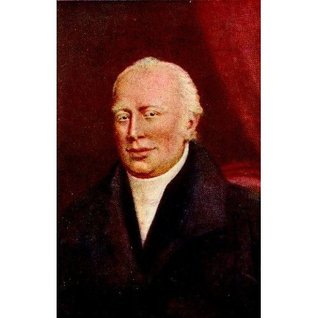
Autobiography of Adam Clarke
by Adam Clarke
There are some circumstances respecting the succeeding Memoirs which require explanation, and others which need statement.
"If these Memoirs were written by the late Dr. Clarke, how happens it that they speak in the third person, and appear as though composed by an intimate friend?" -- The third person was assumed in order to obviate an unpleasant appearance of egotism which Autobiography must always assume, more or less offensive, according to the skill of the Narrator. In this, Dr. Clarke did but follow the example of other great names, and availed himself of a disguise, previously made known to the Readers, that the mere Individual might not be perpetually obtruding himself upon their notice: the attention being fixed upon the passing events and described feelings, the Author temporarily forgotten, the judgment may be thus formed, not from the bias of Dr. Clarke's felt presence, but from the facts as recorded in the Narrative:-- a mask which gives courage but conceals no feature.
Various members of his family, as well as some of his most intimate friends, frequently and urgently pressed Dr. Clarke to publish, or prepare for publication, a Memoir of himself; stating that this would be the only effectual mode of preventing false or weak productions being palmed upon the world as faithful Memoirs. To all representations, however, he remained deaf, till one day a friend came and told him, "he had received sure information of a Life of him being even then in preparation; that all his Conversations had been taken down, all his Letters treasured up, all his observations noted, with the view of being embodied when the anticipated event should take place to call them into public being; that little discretion would be used in selecting; since, the object being gain, all would be published which would sell; and that even were some conscience shown, still there was no judgment to direct; but indiscreet zeal, or the hope of 'ungodly gains' would slay his fame in the house of his friend." * Dr. Clarke felt the force of such observations, and the next morning when he came down to breakfast, he said to his friend, "I have been up long before day, and have written several quarto sheets of my very close and small writing as a commencement of the history of my early life." This he continued, at various short intervals, till be brought it down to a period beyond which no inducement or solicitation could persuade him to proceed, "My early life" [much in this manner he would speak] "no one can know; nor can any one describe my feelings and God's dealings with my soul, some of which are the most important circumstances in my life, and are of most consequence to the religious world:-- these I have now secured, and placed in their proper light: -- what therefore others could neither have known nor described so truly as I, are here prevented from being lost:-- my public life many have known, and it is before the world; if it be of importance, there will be found some who will transmit its events to posterity; and being passed before the eyes of all men, should there be misrepresentations, there will necessarily be plenty who can correct them: at any rate, I have done what I feel to be the most important part; for the rest, there are ample materials; and, as the living will, in all probability, write of the dead, let my survivors do their part. -- Nothing shall ever induce me to write the history of that portion of my life when I began to acquire fame, and great and learned men saw fit to dignify with their acquaintance, and to bestow honors and distinctions on, a Methodist Preacher. In this resolution he never for a moment wavered, and hence there was no more of his Life written by himself than what is contained in the present volume.
"If these Memoirs were written by the late Dr. Clarke, how happens it that they speak in the third person, and appear as though composed by an intimate friend?" -- The third person was assumed in order to obviate an unpleasant appearance of egotism which Autobiography must always assume, more or less offensive, according to the skill of the Narrator. In this, Dr. Clarke did but follow the example of other great names, and availed himself of a disguise, previously made known to the Readers, that the mere Individual might not be perpetually obtruding himself upon their notice: the attention being fixed upon the passing events and described feelings, the Author temporarily forgotten, the judgment may be thus formed, not from the bias of Dr. Clarke's felt presence, but from the facts as recorded in the Narrative:-- a mask which gives courage but conceals no feature.
Various members of his family, as well as some of his most intimate friends, frequently and urgently pressed Dr. Clarke to publish, or prepare for publication, a Memoir of himself; stating that this would be the only effectual mode of preventing false or weak productions being palmed upon the world as faithful Memoirs. To all representations, however, he remained deaf, till one day a friend came and told him, "he had received sure information of a Life of him being even then in preparation; that all his Conversations had been taken down, all his Letters treasured up, all his observations noted, with the view of being embodied when the anticipated event should take place to call them into public being; that little discretion would be used in selecting; since, the object being gain, all would be published which would sell; and that even were some conscience shown, still there was no judgment to direct; but indiscreet zeal, or the hope of 'ungodly gains' would slay his fame in the house of his friend." * Dr. Clarke felt the force of such observations, and the next morning when he came down to breakfast, he said to his friend, "I have been up long before day, and have written several quarto sheets of my very close and small writing as a commencement of the history of my early life." This he continued, at various short intervals, till be brought it down to a period beyond which no inducement or solicitation could persuade him to proceed, "My early life" [much in this manner he would speak] "no one can know; nor can any one describe my feelings and God's dealings with my soul, some of which are the most important circumstances in my life, and are of most consequence to the religious world:-- these I have now secured, and placed in their proper light: -- what therefore others could neither have known nor described so truly as I, are here prevented from being lost:-- my public life many have known, and it is before the world; if it be of importance, there will be found some who will transmit its events to posterity; and being passed before the eyes of all men, should there be misrepresentations, there will necessarily be plenty who can correct them: at any rate, I have done what I feel to be the most important part; for the rest, there are ample materials; and, as the living will, in all probability, write of the dead, let my survivors do their part. -- Nothing shall ever induce me to write the history of that portion of my life when I began to acquire fame, and great and learned men saw fit to dignify with their acquaintance, and to bestow honors and distinctions on, a Methodist Preacher. In this resolution he never for a moment wavered, and hence there was no more of his Life written by himself than what is contained in the present volume.
BUY NOW
Kindle Edition, 237 pages
Published September 7th 2010
Subscribe
Get Bible verse every day in your inbox
Read on Mobile


Group of Brands


© 2026 Bibleportal.com All rights reserved.
Adam Clarke (1762 - 1832)
Was a British Methodist theologian and Biblical scholar. He is chiefly remembered for writing a commentary on the Bible which took him 40 years to complete and which was a primary Methodist theological resource for two centuries. Contained in 6 volumes, consisting of nearly 1,000 pages each, it was considered the most comprehensive commentary on the Bible ever prepared by one man.As a theologian, Clarke reinforced the teachings of Methodist founder John Wesley. He taught that the Bible provides a complete interpretation of God's nature and will. He considered Scripture itself a miracle of God's grace that "takes away the veil of darkness and ignorance." With such an understanding, Clarke was first and foremost a Biblical theologian, often uneasy with purely systematic approaches to theology.
Clarke is chiefly remembered for writing a commentary on the Bible which took him forty years to complete and which was a primary Methodist theological resource for two centuries.
As a theologian, Clarke reinforced the teachings of Methodist founder John Wesley. He taught that the Bible provides a complete interpretation of God's nature and will. He considered Scripture itself a miracle of God's grace that "takes away the veil of darkness and ignorance." With such an understanding, Clarke was first and foremost a Biblical theologian, often uneasy with purely systematic approaches to theology.
Clarke followed Wesley in opposing a Calvinistic scheme of salvation, preferring instead the Wesleyan-Arminian positions regarding predestination, prevenient grace, the offer of justification from God to all persons, entire sanctification, and assurance of salvation. Perhaps his most controversial position regarded the eternal Sonship of Jesus. Clarke did not believe it Biblically faithful to affirm this doctrine, maintaining that prior to the Incarnation, Jesus was "unoriginated." Otherwise, according to Clarke, he would be subordinate to God and therefore not fully divine. This was important to Clarke because he felt that Jesus' divinity was crucial to understanding the atonement.
Clarke's view was opposed by many Methodists, notably Richard Watson. Watson and his allies argued that Clarke's position jeopardized the integrity of the doctrine of the trinity. Clarke's view was rejected by Methodism in favor of the traditional, orthodox perspective.
... Show more