
- Bible
- Read the Bible
- Bible Versions
- Verse of the Day
- Reading Plans
- Verses by Topic
- Books of the Bible
- Bible Images
- Study
- Commentaries
- Concordances
- Dictionaries
- Encyclopedias
- Sermons
- Bible Atlas & Maps
- BP Wiki
- Devotionals
- Today's Devotionals
- All Devotionals
- Inspirational Quotes
- More
- Picture Quotes
- Videos
- Inspirational
- Bible Study
- What The Bible Says
- Bible Q&As
- Daily Bread
- Bible by Genre
- Bible Stories
- Random Bible Verse
- Community
- Store
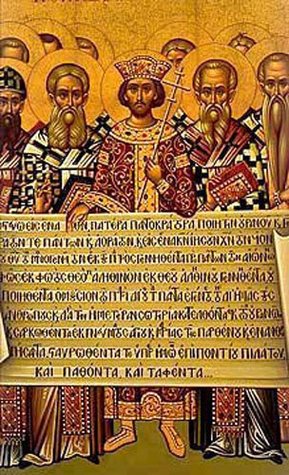
Epistles on Arianism and the Deposition of Arius
by Alexander of Alexandria
St. Alexander of Alexandria: Patriarch of Alexandria, date of birth uncertain; died 17 April, 326. He is, apart from his own greatness, prominent by the fact that his appointment to the patriarchial see excluded the heresiarch Arius from that post. Arius had begun to teach his heresies in 300 when Peter, by whom he was excommunicated, was Patriarch. He was reinstated by Achillas, the successor of Peter and then began to scheme to be made a bishop. When Achillas died Alexander was elected, and after that Arius threw off all disguise. Alexander was particularly obnoxious to him, although so tolerant at first of the errors of Arius that the clergy nearly revolted. Finally the heresy was condemned in a council held in Alexandria, and later on, as is well known, in the general Council of Nicaea, whose Acts Alexander is credited with having drawn up. An additional merit of this great man is that during his priesthood he passed through the bloody persecutions of Galerius, Maximinus, and others. It was while his predecessor Peter was in prison, waiting for martyrdom, that he and Achillas succeeded in reaching the pontiff, and interceded for the reinstatement of Arius, which Peter absolutely refused declaring that Arius was doomed to perdition. The refusal evidently had little effect, for when Achillas succeeded Peter, Arius was made a priest; and when in turn Alexander came to the see, the heretic was still tolerated. It is worth recording that the great Athanasius succeeded Alexander, the dying pontiff compelling the future doctor of the Church to accept the post. Alexander is described as "a man held in the highest honour by the people and clergy, magnificent, liberal, eloquent, just, a lover of God and man, devoted to the poor, good and sweet to all, so mortified that he never broke his fast while the sun was in the heavens." His feast is kept on 17 April.
BUY NOW
Kindle Edition
Published March 24th 2010
Subscribe
Get Bible verse every day in your inbox
Read on Mobile


Group of Brands


© 2026 Bibleportal.com All rights reserved.
Alexander of Alexandria (unknown - 326)
19th Pope of Alexandria & Patriarch of the See of St. Mark. During his patriarchate, he dealt with a number of issues facing the Church in that day. These included the dating of Easter, the actions of Meletius of Lycopolis, and the issue of greatest substance, Arianism. He was the leader of the opposition to Arianism at the First Council of Nicaea. He also is remembered for being the mentor of the man who would be his successor, Athanasius of Alexandria, who would become one of the leading Church fathers.Alexander came to the council with a party which included Potamon of Heraclea, Paphnutius of Thebes, and Alexander's deacon, Athanasius, who acted as his spokesman. Alexander was himself supposed to preside over the meeting, but felt that he could not serve as both presiding official and chief accuser. On that basis, he turned over the presidency to Hosius of Cordova. After lengthy discussion, the council issued a decision which, among other things, confirmed the anaethema of Arius, authorized Alexander, at his urging, to allow Meletius to retain his episcopal title, but not be able to exercise any episcopal powers. Those Meletius had appointed could also retain their titles, but would only be elevated to the status of bishop on the death of one of the bishops consecrated by Alexander. It also gave Alexander the right to decide the timing of Easter on his own, asking him only to communicate his decision to Rome and the rest of Christendom. It also issued a statement that the Egyptian church would be allowed to retain its traditions regarding clerical celibacy. In this regard, Alexander followed the advice of Paphnutius of Thebes, who encouraged him to allow priests to be married after taking holy orders. Five months after returning to Alexandria from Nicaea, Alexander died. One source places his death on the 22nd of Baramudah, or April 17. As he was dying, he is said by some to have named Athanasius, his deacon, as his successor.[3]
... Show more