
- Bible
- Read the Bible
- Bible Versions
- Verse of the Day
- Reading Plans
- Verses by Topic
- Books of the Bible
- Bible Images
- Study
- Commentaries
- Concordances
- Dictionaries
- Encyclopedias
- Sermons
- Bible Atlas & Maps
- BP Wiki
- Devotionals
- Today's Devotionals
- Light of the World
- All Devotionals
- Inspirational Quotes
- More
- Picture Quotes
- Videos
- Inspirational
- Bible Study
- What The Bible Says
- Bible Q&As
- Daily Bread
- Bible by Genre
- Bible Stories
- Random Bible Verse
- Community
- Store
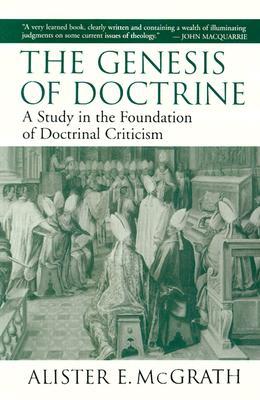
The Genesis of Doctrine: A Study in the Foundation of Doctrinal Criticism
by Alister McGrath
What is doctrine? How can a doctrinal statement made in the past have any authority in the modern period? How should doctrinal statements be evaluated and criticized? These questions are of central importance to Christian theology and have important consequences for the church. In the course of its extensive historical and theological analysis, this study presents a detailed investigation of the development of Christian doctrine and the nature of doctrine itself.
This groundbreaking study, based on the prestigious 1990 Bampton Lectures delivered at Oxford University, explores the reasons why doctrine is a necessary aspect of Christian existence and examines some of the factors that govern its development.
Alister E. McGrath begins with a critical engagement with the views of George Lindbeck on the nature of doctrine before moving on to present a fresh understanding of the nature and function of Christian doctrine within the church. Particular attention is paid to the way in which doctrine acts as a demarcator between communities of faith, allowing important insights to contemporary ecumenical debates.
McGrath also explores the critically important issue of the authority of the past in Christian theology, focusing especially on the manner in which doctrine serves as a means of maintaining continuity with the past heritage of the Christian tradition. The book represents an exploration of a "middle way" in relation to the significance of Christian doctrine, rejecting both those approaches that insist on the uncritical repetition of the doctrinal heritage of the past and those that reject the authority of past doctrinal formulations. McGrath concludes his work by considering whether doctrine has a future within the church, and he answers this question in the affirmative on the basis of a number of important theological and cultural considerations.
This groundbreaking study, based on the prestigious 1990 Bampton Lectures delivered at Oxford University, explores the reasons why doctrine is a necessary aspect of Christian existence and examines some of the factors that govern its development.
Alister E. McGrath begins with a critical engagement with the views of George Lindbeck on the nature of doctrine before moving on to present a fresh understanding of the nature and function of Christian doctrine within the church. Particular attention is paid to the way in which doctrine acts as a demarcator between communities of faith, allowing important insights to contemporary ecumenical debates.
McGrath also explores the critically important issue of the authority of the past in Christian theology, focusing especially on the manner in which doctrine serves as a means of maintaining continuity with the past heritage of the Christian tradition. The book represents an exploration of a "middle way" in relation to the significance of Christian doctrine, rejecting both those approaches that insist on the uncritical repetition of the doctrinal heritage of the past and those that reject the authority of past doctrinal formulations. McGrath concludes his work by considering whether doctrine has a future within the church, and he answers this question in the affirmative on the basis of a number of important theological and cultural considerations.
BUY NOW
Paperback, 276 pages
Published June 11th 1997 by Eerdmans (first published January 1st 1990)
Subscribe
Get Bible verse every day in your inbox
Read on Mobile


Group of Brands


© 2026 Bibleportal.com All rights reserved.
Alister Edgar McGrath is a Christian theologian and apologist, who holds both a PhD (in molecular biophysics) and an earned Doctor of Divinity degree from Oxford. He is noted for his work in historical, systematic and scientific theology. He was formerly an atheist.
In his writing and public speaking, he promotes "scientific theology" and opposes antireligionism. McGrath was until recently Professor of Historical Theology at the University of Oxford, but has now taken up the chair of Theology, Religion and Culture at King's College London since September 2008. Until 2005, he was principal of Wycliffe Hall.
McGrath is a prolific writer. His work often refers both to the early Church Fathers and to contemporary evangelical stalwarts such as Thomas Torrance and J. I. Packer. His areas of expertise include doctrine, Church history, the interaction of science and faith, and evangelical spirituality.
In 2005 he resigned as Principal of Wycliffe Hall, whilst remaining President of the Oxford Centre for Christian Apologetics which was based there.
... Show more