
- Bible
- Read the Bible
- Bible Versions
- Verse of the Day
- Reading Plans
- Verses by Topic
- Books of the Bible
- Bible Images
- Study
- Commentaries
- Concordances
- Dictionaries
- Encyclopedias
- Sermons
- Bible Atlas & Maps
- BP Wiki
- Devotionals
- Today's Devotionals
- Light of the World
- All Devotionals
- Inspirational Quotes
- More
- Picture Quotes
- Videos
- Inspirational
- Bible Study
- What The Bible Says
- Bible Q&As
- Daily Bread
- Bible by Genre
- Bible Stories
- Random Bible Verse
- Community
- Store
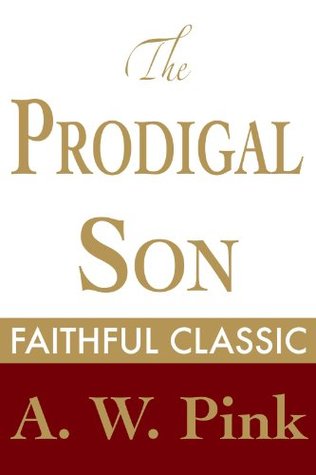
The Prodigal Son (Arthur Pink Collection)
by Arthur Pink
▶ DESCRIPTION
Who does the “prodigal son” represent? Is it an unregenerate sinner, or a backslidden believer that is in view? There is a division of sentiment upon this point. Personally, we have no doubt whatever that in this part of the parable of the Salvation of the Lost, the Lord Jesus pictures an unregenerate sinner. Our interpretation will proceed along this line, but before we give it, let us first present some proofs that it is not a backslidden believer that is before us.
▶ CONTENTS
Luke 15:11-32
Introduction
The Prodigal Himself
1. He had a “substance” or “portion.”
2. He “took his journey into a far country” (:13).
3. He “wasted his substance with riotous living” (:13).
4. He encountered “a mighty famine” (:14).
5. He “began to be in want” (:14).
6. He “went and joined himself to a citizen of that country” (:15).
7. He “came to himself” (:17).
8. He said, “I will arise and go to my father” (:18).
9. He is still legalistic.
10. He “arose and came to his father” (:20).
The Prodigal’s Reception
1. The Hearty Welcome He Received
2. The Prodigal’s Response
3. The Robe Which Was Put upon Him
4. The Ring Placed upon His Hand
5. The Shoes Provided for His Feet
6. The Fatted Calf Killed and Eaten
7. The Resultant Joy
▶ AUTHOR
Arthur W. Pink was born in Nottingham England in 1886, and born again of the Spirit of God in 1908 at the age of 22. He studied at Moody Bible Institute in Chicago, USA, for only six weeks before beginning his pastoral work in Colorado. From there he pastored churches in California, Kentucky, and South Carolina, before moving to Sydney Australia for a brief period, preaching and teaching. In 1934, at 48 years old, he returned to his native England. He took permanent residence in Lewis, Scotland, in 1940, remaining there 12 years until his death at age 66 in 1952.
Who does the “prodigal son” represent? Is it an unregenerate sinner, or a backslidden believer that is in view? There is a division of sentiment upon this point. Personally, we have no doubt whatever that in this part of the parable of the Salvation of the Lost, the Lord Jesus pictures an unregenerate sinner. Our interpretation will proceed along this line, but before we give it, let us first present some proofs that it is not a backslidden believer that is before us.
▶ CONTENTS
Luke 15:11-32
Introduction
The Prodigal Himself
1. He had a “substance” or “portion.”
2. He “took his journey into a far country” (:13).
3. He “wasted his substance with riotous living” (:13).
4. He encountered “a mighty famine” (:14).
5. He “began to be in want” (:14).
6. He “went and joined himself to a citizen of that country” (:15).
7. He “came to himself” (:17).
8. He said, “I will arise and go to my father” (:18).
9. He is still legalistic.
10. He “arose and came to his father” (:20).
The Prodigal’s Reception
1. The Hearty Welcome He Received
2. The Prodigal’s Response
3. The Robe Which Was Put upon Him
4. The Ring Placed upon His Hand
5. The Shoes Provided for His Feet
6. The Fatted Calf Killed and Eaten
7. The Resultant Joy
▶ AUTHOR
Arthur W. Pink was born in Nottingham England in 1886, and born again of the Spirit of God in 1908 at the age of 22. He studied at Moody Bible Institute in Chicago, USA, for only six weeks before beginning his pastoral work in Colorado. From there he pastored churches in California, Kentucky, and South Carolina, before moving to Sydney Australia for a brief period, preaching and teaching. In 1934, at 48 years old, he returned to his native England. He took permanent residence in Lewis, Scotland, in 1940, remaining there 12 years until his death at age 66 in 1952.
BUY NOW
Kindle Edition, 29 pages
Published June 18th 2012 by Prisbrary Publishing
Subscribe
Get Bible verse every day in your inbox
Read on Mobile


Group of Brands


© 2026 Bibleportal.com All rights reserved.
Arthur Walkington Pink was an English Bible teacher who sparked a renewed interest in the exposition of Calvinism or Reformed Theology. Little known in his own lifetime, Pink became "one of the most influential evangelical authors in the second half of the twentieth century."
... Show more