
- Bible
- Read the Bible
- Bible Versions
- Verse of the Day
- Reading Plans
- Verses by Topic
- Books of the Bible
- Bible Images
- Study
- Commentaries
- Concordances
- Dictionaries
- Encyclopedias
- Sermons
- Bible Atlas & Maps
- BP Wiki
- Devotionals
- Today's Devotionals
- Light of the World
- All Devotionals
- Inspirational Quotes
- More
- Picture Quotes
- Videos
- Inspirational
- Bible Study
- What The Bible Says
- Bible Q&As
- Daily Bread
- Bible by Genre
- Bible Stories
- Random Bible Verse
- Community
- Store
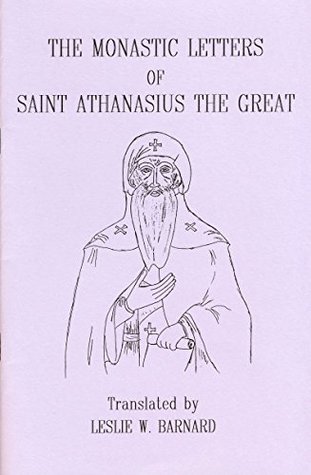
Scholars have often concentrated on the theological writings of St Athanasius (c. 296-373 AD) and on his influence as a religious leader, so that his contribution to the monastic life has not received due recognition. In these six letters addressed to monks, Athanasius is revealed as a wise spiritual guide and loving pastor, determined that the monks should receive sound teaching, so as to avoid the pitfalls of heresies current at that time. As Leslie Barnard notes in his Introduction, ‘The permanent significance of these letters lies in their wisdom, moderation and balance.’
Saint Athanasius (c. 295 - 373), Bishop and Doctor of the Church, was born in Alexandria of Christian parents. After successful studies, he spent time in the desert in retreat with Saint Antony the Great. In 325, he attended as a deacon the Council of Nicea, where his influence began to be felt. He was elected Archbishop of Alexandria in 328, but seventeen of the forty-six years of his episcopate were spent in exile, due to his active and ruthless stand against the heretical teachings of Arius. His extant writings include a ‘Life’ of Saint Antony and treatises on Christian dogma.
Leslie William Barnard, born in 1924, was ordained priest in 1952 and now lives in retirement. He was Senior Lecturer in Theology at the University of Leeds 1968-86, his chief area of study being fourth-century patristic writings.
Saint Athanasius (c. 295 - 373), Bishop and Doctor of the Church, was born in Alexandria of Christian parents. After successful studies, he spent time in the desert in retreat with Saint Antony the Great. In 325, he attended as a deacon the Council of Nicea, where his influence began to be felt. He was elected Archbishop of Alexandria in 328, but seventeen of the forty-six years of his episcopate were spent in exile, due to his active and ruthless stand against the heretical teachings of Arius. His extant writings include a ‘Life’ of Saint Antony and treatises on Christian dogma.
Leslie William Barnard, born in 1924, was ordained priest in 1952 and now lives in retirement. He was Senior Lecturer in Theology at the University of Leeds 1968-86, his chief area of study being fourth-century patristic writings.
BUY NOW
Kindle Edition, 42 pages
Published June 6th 2017 by SLG Press
Subscribe
Get Bible verse every day in your inbox
Read on Mobile


Group of Brands


© 2026 Bibleportal.com All rights reserved.
St. Athanasius (296 - 373)
Saint Athanasius of Alexandria (/ˌæθəˈneɪʃəs/; Greek: Ἀθανάσιος Ἀλεξανδρείας, Athanásios Alexandrías; c. 296–298 – 2 May 373), also called Athanasius the Great, Athanasius the Confessor or, primarily in the Coptic Orthodox Church, Athanasius the Apostolic, was the twentieth bishop of Alexandria (as Athanasius I). His episcopate lasted 45 years (c. 8 June 328 – 2 May 373), of which over 17 were spent in five exiles ordered by four different Roman emperors. Athanasius was a Christian theologian, a Church Father, the chief defender of Trinitarianism against Arianism, and a noted Egyptian leader of the fourth century..Within a few years after his death, Gregory of Nazianzus called him the "Pillar of the Church". His writings were well regarded by all Church fathers who followed, in both the West and the East, who noted their rich devotion to the Word-become-man, great pastoral concern, and profound interest in monasticism. Athanasius is counted as one of the four great Eastern Doctors of the Church in the Roman Catholic Church.[3] In the Eastern Orthodox Church, he is labeled as the "Father of Orthodoxy". Some Protestants label him as "Father of the Canon". Athanasius is venerated as a Christian saint, whose feast day is 2 May in Western Christianity, 15 May in the Coptic Orthodox Church, and 18 January in the other Eastern Orthodox Churches. He is venerated by the Oriental and Eastern Orthodox Churches, the Roman Catholic Church, the Lutherans, and the Anglican Communion.
... Show more