Few ancient Christian authors attempted anything like a complete commentary on the Gospel of John, among them Origen, John Chrysostom and Augustine. Of these, Augustine's must count as the greatest. Unlike Origen's, it has come down to us in its entirety, and of the others that remain it is certainly the most theologically profound. John's gospel allows Augustine to range broadly over themes that were his life's work - the Trinity, the person of Christ, the nature of the Church and its sacraments, the fulfillment of the divine plan. The 124 homilies that constitute Augustine's commentary, however, are masterpieces not only of theological profundity but also of pastoral engagement. In the question-and-answer style that he frequently employs, for example, one can sense Augustine's real awareness of his congregation's struggles with the gospel text. And the congregation's response to Augustine, which he frequently alludes to, is an indication of the success of his dialogical preaching style. The Johannine literature drew out the best in Augustine. The Homilies on the Gospel of John are the indispensible complement to The Homilies on The First Epistle of John, recently published in this series, and they should be a part of any serious theological library.

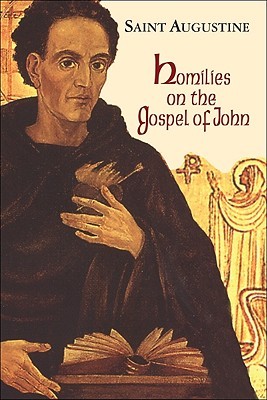


Aurelius Augustinus - more commonly "St. Augustine of Hippo," or simply "Augustine" - was a philosopher and theologian, and one of the most important figures in the development of Western Christianity. He framed the concepts of original sin and just war. Augustine was one of the most prolific Latin authors in terms of surviving works, and the list of his works consists of more than a hundred separate titles.
Augustine took the view that the Biblical text should not be interpreted literally if it contradicts what we know from science and our God-given reason. Many Protestants, especially Calvinists, consider him to be one of the theological fathers of Reformation teaching on salvation and divine grace.
... Show more