
- Bible
- Read the Bible
- Bible Versions
- Verse of the Day
- Reading Plans
- Verses by Topic
- Books of the Bible
- Bible Images
- Study
- Commentaries
- Concordances
- Dictionaries
- Encyclopedias
- Sermons
- Bible Atlas & Maps
- BP Wiki
- Devotionals
- Today's Devotionals
- Light of the World
- All Devotionals
- Inspirational Quotes
- More
- Picture Quotes
- Videos
- Inspirational
- Bible Study
- What The Bible Says
- Bible Q&As
- Daily Bread
- Bible by Genre
- Bible Stories
- Random Bible Verse
- Community
- Store
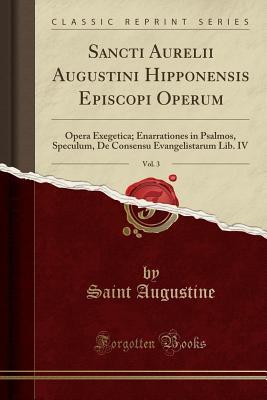
Excerpt from Sancti Aurelii Augustini Hipponensis Episcopi Operum, Vol. 3: Opera Exegetica; Enarrationes in Psalmos, Speculum, De Consensu Evangelistarum Lib. IV
Ille enim tibi modo advocatus est, qui tune judex futurus est. Ille erit, et tu, et causa tua; sermo causae tum, testi monium conscientiae tuae. Quisquis ergo futurumjudicem times praesentem conscientiam tuam modo corrige. Pa rum-me tibi est, quod praeterita non rcquiret'? Sine reliquo spatio temporis tunc judicabit sed dum quanto spatio temporis modo praecipit? Tune jam corrigi non licebit modo quis prohibet? Hoc cum vehementer commenda remus Dominico die quia revera quia prope hoc solum dicendum est, non parum temporis efiluxit, et coacti su.
About the Publisher
Forgotten Books publishes hundreds of thousands of rare and classic books. Find more at www.forgottenbooks.comwww.forgottenbooks.com
This book is a reproduction of an important historical work. Forgotten Books uses state-of-the-art technology to digitally reconstruct the work, preserving the original format whilst repairing imperfections present in the aged copy. In rare cases, an imperfection in the original, such as a blemish or missing page, may be replicated in our edition. We do, however, repair the vast majority of imperfections successfully; any imperfections that remain are intentionally left to preserve the state of such historical works.
Ille enim tibi modo advocatus est, qui tune judex futurus est. Ille erit, et tu, et causa tua; sermo causae tum, testi monium conscientiae tuae. Quisquis ergo futurumjudicem times praesentem conscientiam tuam modo corrige. Pa rum-me tibi est, quod praeterita non rcquiret'? Sine reliquo spatio temporis tunc judicabit sed dum quanto spatio temporis modo praecipit? Tune jam corrigi non licebit modo quis prohibet? Hoc cum vehementer commenda remus Dominico die quia revera quia prope hoc solum dicendum est, non parum temporis efiluxit, et coacti su.
About the Publisher
Forgotten Books publishes hundreds of thousands of rare and classic books. Find more at www.forgottenbooks.comwww.forgottenbooks.com
This book is a reproduction of an important historical work. Forgotten Books uses state-of-the-art technology to digitally reconstruct the work, preserving the original format whilst repairing imperfections present in the aged copy. In rare cases, an imperfection in the original, such as a blemish or missing page, may be replicated in our edition. We do, however, repair the vast majority of imperfections successfully; any imperfections that remain are intentionally left to preserve the state of such historical works.
BUY NOW
Paperback, 590 pages
Published April 22nd 2018 by Forgotten Books


Group of Brands


© 2026 Bibleportal.com All rights reserved.
Aurelius Augustinus - more commonly "St. Augustine of Hippo," or simply "Augustine" - was a philosopher and theologian, and one of the most important figures in the development of Western Christianity. He framed the concepts of original sin and just war. Augustine was one of the most prolific Latin authors in terms of surviving works, and the list of his works consists of more than a hundred separate titles.
Augustine took the view that the Biblical text should not be interpreted literally if it contradicts what we know from science and our God-given reason. Many Protestants, especially Calvinists, consider him to be one of the theological fathers of Reformation teaching on salvation and divine grace.
... Show more