
- Bible
- Read the Bible
- Bible Versions
- Verse of the Day
- Reading Plans
- Verses by Topic
- Books of the Bible
- Bible Images
- Study
- Commentaries
- Concordances
- Dictionaries
- Encyclopedias
- Sermons
- Bible Atlas & Maps
- BP Wiki
- Devotionals
- Today's Devotionals
- Light of the World
- All Devotionals
- Inspirational Quotes
- More
- Picture Quotes
- Videos
- Inspirational
- Bible Study
- What The Bible Says
- Bible Q&As
- Daily Bread
- Bible by Genre
- Bible Stories
- Random Bible Verse
- Community
- Store
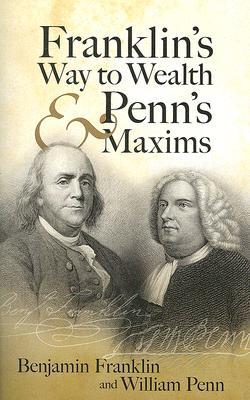
Franklin's Way to Wealth and Penn's Maxims
by Benjamin Franklin
Witty, wise, and elegant in their simplicity, the timeless adages in this inspiring volume originated with two influential figures of early American history. Franklin’s Way to WealthFranklin’s Way to Wealth began as a preface to Poor Richard’s Almanack,Poor Richard’s Almanack, the popular book of advice by Benjamin Franklin, the beloved founding father. Penn’s MaximsPenn’s Maxims features hundreds of observations by the Quaker leader, William Penn, who founded the colony of Pennsylvania. Both offer enduring counsel on how to live — both materially and spiritually.
In addition to his active role in guiding colonial America to independence, Benjamin Franklin was a shrewd businessman who amassed a substantial personal fortune. His life story offers an ideal example of the application of a successful work ethic. In his treatise, he presents his own tried-and-true attitudes toward money management, with quotable thoughts on the rewards of industry, the perils of debt, and the futility of idleness.
The democratic principles by which William Penn governed Pennsylvania — including complete freedom of religion, fair trials, and a system of elected representatives — were later adopted into the federal constitution. This collection presents hundreds of his sage reflections, ranging from thoughts on government, education, and religion, to meditations on charity, friendship, and patience.
In addition to his active role in guiding colonial America to independence, Benjamin Franklin was a shrewd businessman who amassed a substantial personal fortune. His life story offers an ideal example of the application of a successful work ethic. In his treatise, he presents his own tried-and-true attitudes toward money management, with quotable thoughts on the rewards of industry, the perils of debt, and the futility of idleness.
The democratic principles by which William Penn governed Pennsylvania — including complete freedom of religion, fair trials, and a system of elected representatives — were later adopted into the federal constitution. This collection presents hundreds of his sage reflections, ranging from thoughts on government, education, and religion, to meditations on charity, friendship, and patience.
Paperback, 96 pages
Published March 14th 2008 by Dover Publications (first published July 14th 2003)
Subscribe
Get Bible verse every day in your inbox
Read on Mobile


Group of Brands


© 2026 Bibleportal.com All rights reserved.
Benjamin Franklin was an important conservative figure in the American Restoration Movement, especially as the leading antebellum conservative in the northern United States branch of the movement. He is notable as the early and lifelong mentor of Daniel Sommer, whose support of the 1889 Sand Creek Declaration set in motion events which led to the formal division of the Churches of Christ from the Disciples of Christ in 1906.
According to contemporary biographies "His early religious training was according to the Methodist faith, though he never belonged to any church until he united with the Disciples."
In 1856, Franklin began to publish the ultra-conservative American Christian Review, which he published until his death in 1878. Its influence, initially considerable, was said to have waned following the American Civil War. Franklin undertook a rigorous program of publication correspondence, and traveling lectures which took him to "many" U. S. states and Canada.
Franklin's last move was to Anderson, Indiana, where he lived from 1864 until his death.
... Show more