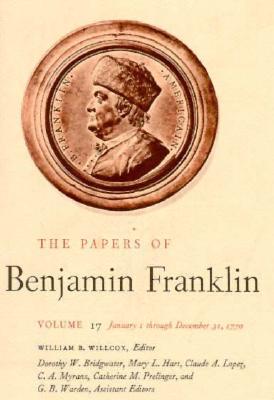
The year 1770 was momentous on both sides of the Atlantic. In England, Lord North began his long and calamitous ministry by repealing all the Townsend duties except that on tea. This partial repeal eroded the basis of the nonimportation agreements and they quickly collapsed. Franklin lost his campaign in America to keep them in force, just as he lost his campaign in England to secure total repeal.
Perhaps these defeats forced Franklin to re-examine his position. In any case he became less an irenic pragmatist and more a radical. In Massachusetts, where political debate was at its hottest, he publicized for the first time his belief that Parliament did not have sovereignty over the empire. A few months later he was elected agent of the Massachusetts House of Representatives, and thereafter he was de facto spokesman for four of the thirteen colonies.
For that very reason he was open to attack. In Boston he was suspect as a royal official and the father of a colonial governor. In England he was vilified as an unfaithful servant of the crown, and his position in the post Office was endangered. But he continued on his course, unrepentant, and in the privacy of his study he resumed his habit of writing lengthy marginalia on the pamphlets he was reading. These comments are the nearest we can come to listening to the man in conversation.



Benjamin Franklin was an important conservative figure in the American Restoration Movement, especially as the leading antebellum conservative in the northern United States branch of the movement. He is notable as the early and lifelong mentor of Daniel Sommer, whose support of the 1889 Sand Creek Declaration set in motion events which led to the formal division of the Churches of Christ from the Disciples of Christ in 1906.
According to contemporary biographies "His early religious training was according to the Methodist faith, though he never belonged to any church until he united with the Disciples."
In 1856, Franklin began to publish the ultra-conservative American Christian Review, which he published until his death in 1878. Its influence, initially considerable, was said to have waned following the American Civil War. Franklin undertook a rigorous program of publication correspondence, and traveling lectures which took him to "many" U. S. states and Canada.
Franklin's last move was to Anderson, Indiana, where he lived from 1864 until his death.
... Show more