
- Bible
- Read the Bible
- Bible Versions
- Verse of the Day
- Reading Plans
- Verses by Topic
- Books of the Bible
- Bible Images
- Study
- Commentaries
- Concordances
- Dictionaries
- Encyclopedias
- Sermons
- Bible Atlas & Maps
- BP Wiki
- Devotionals
- Today's Devotionals
- Light of the World
- All Devotionals
- Inspirational Quotes
- More
- Picture Quotes
- Videos
- Inspirational
- Bible Study
- What The Bible Says
- Bible Q&As
- Daily Bread
- Bible by Genre
- Bible Stories
- Random Bible Verse
- Community
- Store
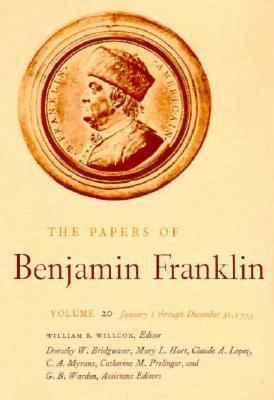
The Papers of Benjamin Franklin, Vol. 20: Volume 20: January 1 through December 31, 1773
by Benjamin Franklin
Franklin’s activities in 1773 were as multifarious as ever, but behind them were two developments that closely affected his future. One was the growing impact on him and his London world of the shock waves emanating from Boston—the constitutional debate between Governor Hutchinson and his opponents in the General Court, the petition from the House of Representatives for the removal of the Governor and Lieutenant Governor, and in December the Tea Party. The Bostonians were more and more openly defiant, and their agent was almost as busy in antagonizing Whitehall. His revelation on Christmas Day that he had obtained and send the Hutchison letters were only the latest in a series of provocations during the year. In June he published, with a preface of his own, a set of radical resolutions passed by the Boston town meeting November, 1772; and in September he attacked British policy in his two famous satires, “Rules by Which a Great Empire May Be Reduced to a Small One” and the “Edict by the King of Prussia.”
The other development that affected his future was the appearance of the first comprehensive French translation of his works. Hitherto only small snippets of what he had written in the past two decades had been available to the French-speaking intelligentsia of Europe. Now the whole man, shrewd, wide-ranging, and voracious in his curiosity, was there to be seen; and his stature commanded recognition. At the moment when his political position in England was being eroded, his place in the Enlightenment was becoming more secure.
The other development that affected his future was the appearance of the first comprehensive French translation of his works. Hitherto only small snippets of what he had written in the past two decades had been available to the French-speaking intelligentsia of Europe. Now the whole man, shrewd, wide-ranging, and voracious in his curiosity, was there to be seen; and his stature commanded recognition. At the moment when his political position in England was being eroded, his place in the Enlightenment was becoming more secure.
BUY NOW
Hardcover, 656 pages
Published September 10th 1976 by Yale University Press
Subscribe
Get Bible verse every day in your inbox
Read on Mobile


Group of Brands


© 2026 Bibleportal.com All rights reserved.
Benjamin Franklin was an important conservative figure in the American Restoration Movement, especially as the leading antebellum conservative in the northern United States branch of the movement. He is notable as the early and lifelong mentor of Daniel Sommer, whose support of the 1889 Sand Creek Declaration set in motion events which led to the formal division of the Churches of Christ from the Disciples of Christ in 1906.
According to contemporary biographies "His early religious training was according to the Methodist faith, though he never belonged to any church until he united with the Disciples."
In 1856, Franklin began to publish the ultra-conservative American Christian Review, which he published until his death in 1878. Its influence, initially considerable, was said to have waned following the American Civil War. Franklin undertook a rigorous program of publication correspondence, and traveling lectures which took him to "many" U. S. states and Canada.
Franklin's last move was to Anderson, Indiana, where he lived from 1864 until his death.
... Show more