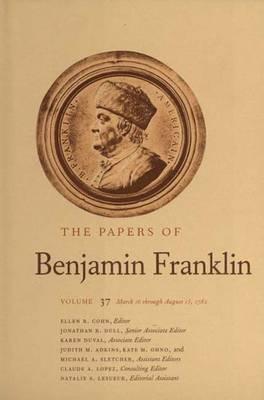
This book, encompassing five months during 1782, promises to be one of the most significant volumes in the entire series of Benjamin Franklin’s papers. Between March and August, Franklin mastered one of the greatest challenges of his diplomatic career by establishing the framework for a peace agreement with Great Britain.
The negotiations required enormous subtlety in order to mollify the French while also satisfying the British. Franklin’s success was based upon the same strengths he had demonstrated several years earlier during the lengthy search for an alliance with the French government: an unswerving confidence in the rectitude and ultimate triumph of the American cause, immense patience, and an aptitude for one of the diplomat’s most subtle arts—creating contrasting impressions for different audiences.



Benjamin Franklin was an important conservative figure in the American Restoration Movement, especially as the leading antebellum conservative in the northern United States branch of the movement. He is notable as the early and lifelong mentor of Daniel Sommer, whose support of the 1889 Sand Creek Declaration set in motion events which led to the formal division of the Churches of Christ from the Disciples of Christ in 1906.
According to contemporary biographies "His early religious training was according to the Methodist faith, though he never belonged to any church until he united with the Disciples."
In 1856, Franklin began to publish the ultra-conservative American Christian Review, which he published until his death in 1878. Its influence, initially considerable, was said to have waned following the American Civil War. Franklin undertook a rigorous program of publication correspondence, and traveling lectures which took him to "many" U. S. states and Canada.
Franklin's last move was to Anderson, Indiana, where he lived from 1864 until his death.
... Show more