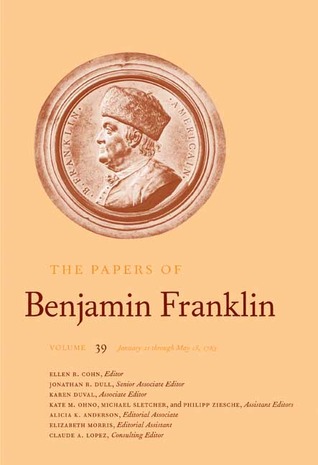
In the four months following the January 20, 1783, armistice that ended the War for American Independence, Franklin was remarkably energetic as he helped oversee the transition to peace and waged a multifaceted campaign to publicize the ideals of the new nation. Though political turmoil in Britain delayed negotiations for the definitive peace treaty, Franklin deftly negotiated America's first commercial treaty with a neutral nation, Sweden, which was signed in secret. He distributed his richly symbolic Libertas AmericanaLibertas Americana medal, worked toward the publication of his French edition of the American state constitutions, and fielded scores of letters from people all over Europe who sought to emigrate, to establish trade connections with the United States, to become consuls, and to offer congratulations and advice.



Benjamin Franklin was an important conservative figure in the American Restoration Movement, especially as the leading antebellum conservative in the northern United States branch of the movement. He is notable as the early and lifelong mentor of Daniel Sommer, whose support of the 1889 Sand Creek Declaration set in motion events which led to the formal division of the Churches of Christ from the Disciples of Christ in 1906.
According to contemporary biographies "His early religious training was according to the Methodist faith, though he never belonged to any church until he united with the Disciples."
In 1856, Franklin began to publish the ultra-conservative American Christian Review, which he published until his death in 1878. Its influence, initially considerable, was said to have waned following the American Civil War. Franklin undertook a rigorous program of publication correspondence, and traveling lectures which took him to "many" U. S. states and Canada.
Franklin's last move was to Anderson, Indiana, where he lived from 1864 until his death.
... Show more