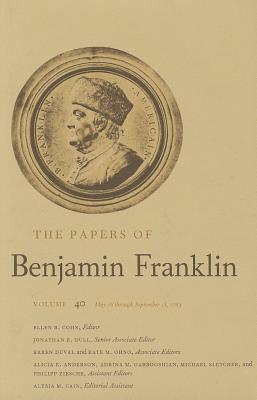
During the period of this volume, the United States of America completed its transformation into a fully recognized independent nation. In May, Franklin and his fellow American peace commissioners John Adams, John Jay, and Henry Laurens recommenced treaty negotiations with their new British counterpart David Hartley. Those negotiations proved fruitless, as the new British ministry rejected all proposals for additional articles. On September 3, 1783, the commissioners signed the Definitive Treaty of Peace, which was essentially identical to the preliminary articles signed the previous November. While this marked the official end of the War for American Independence, the nations of Europe had long since recognized the United States. In the spring, Franklin, as sole minister plenipotentiary, secretly negotiated draft commercial treaties with Denmark and Portugal. After being recognized by the diplomatic corps in early July, he received overtures from other ambassadors, including a proposal from the papal nuncio concerning American Catholics. Franklin published a French edition of the American state constitutions, which he sent to every monarch in Europe, witnessed the first hot-air balloon ascension, welcomed his grandson Benjamin Franklin Bache back from Geneva, and wrote to his friends that "There never was a good War or a bad Peace."



Benjamin Franklin was an important conservative figure in the American Restoration Movement, especially as the leading antebellum conservative in the northern United States branch of the movement. He is notable as the early and lifelong mentor of Daniel Sommer, whose support of the 1889 Sand Creek Declaration set in motion events which led to the formal division of the Churches of Christ from the Disciples of Christ in 1906.
According to contemporary biographies "His early religious training was according to the Methodist faith, though he never belonged to any church until he united with the Disciples."
In 1856, Franklin began to publish the ultra-conservative American Christian Review, which he published until his death in 1878. Its influence, initially considerable, was said to have waned following the American Civil War. Franklin undertook a rigorous program of publication correspondence, and traveling lectures which took him to "many" U. S. states and Canada.
Franklin's last move was to Anderson, Indiana, where he lived from 1864 until his death.
... Show more