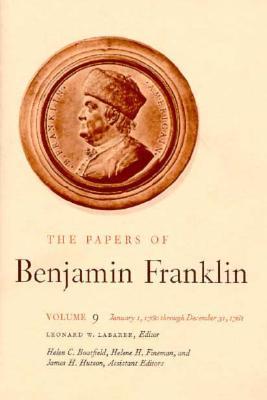
Early in the period covered by this volume Franklin wrote the "Canada Pamphlet," one of his earliest and most important efforts to influence British public opinion. In it he urged that in peace negotiations with France, Great Britain should insist on receiving the whole of Canada as a permanent possession, rather than the island of Guadeloupe. Franklin's time and attention were also taken up by a major contest with the Pennsylvania Proprietors before the officers of the Crown to gain royal approval of a series of important acts passed by the Assembly. Neither side won a complete victory, though on the central issue that had taken Franklin to England he achieved the recognition of the Assembly's right to tax the proprietary estates on the same basis as the property of other landowners. His periods of leisure were brightened by a widening circle of British friends and by travel in England and the Low Countries.



Benjamin Franklin was an important conservative figure in the American Restoration Movement, especially as the leading antebellum conservative in the northern United States branch of the movement. He is notable as the early and lifelong mentor of Daniel Sommer, whose support of the 1889 Sand Creek Declaration set in motion events which led to the formal division of the Churches of Christ from the Disciples of Christ in 1906.
According to contemporary biographies "His early religious training was according to the Methodist faith, though he never belonged to any church until he united with the Disciples."
In 1856, Franklin began to publish the ultra-conservative American Christian Review, which he published until his death in 1878. Its influence, initially considerable, was said to have waned following the American Civil War. Franklin undertook a rigorous program of publication correspondence, and traveling lectures which took him to "many" U. S. states and Canada.
Franklin's last move was to Anderson, Indiana, where he lived from 1864 until his death.
... Show more