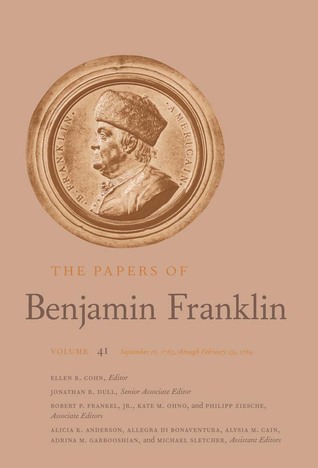
After the signing of the definitive peace treaty on September 3, 1783, Franklin’s official duties as minister plenipotentiary diminished. He concluded a draft consular convention with France, but Great Britain did not act on the articles for a commercial agreement that he negotiated with David Hartley, and Congress did not ratify the draft treaties of commerce with Denmark and Portugal that he had sent to Philadelphia the previous summer. In his welcome leisure time, however, Franklin followed scientific developments (witnessing the first balloon ascensions in Paris), advised the French government on schemes for civic improvement (making cornbread and building coal-burning stoves), and wrote three of his most remarkable pieces about what it meant to be American.



Benjamin Franklin was an important conservative figure in the American Restoration Movement, especially as the leading antebellum conservative in the northern United States branch of the movement. He is notable as the early and lifelong mentor of Daniel Sommer, whose support of the 1889 Sand Creek Declaration set in motion events which led to the formal division of the Churches of Christ from the Disciples of Christ in 1906.
According to contemporary biographies "His early religious training was according to the Methodist faith, though he never belonged to any church until he united with the Disciples."
In 1856, Franklin began to publish the ultra-conservative American Christian Review, which he published until his death in 1878. Its influence, initially considerable, was said to have waned following the American Civil War. Franklin undertook a rigorous program of publication correspondence, and traveling lectures which took him to "many" U. S. states and Canada.
Franklin's last move was to Anderson, Indiana, where he lived from 1864 until his death.
... Show more