
- Bible
- Read the Bible
- Bible Versions
- Verse of the Day
- Reading Plans
- Verses by Topic
- Books of the Bible
- Bible Images
- Study
- Commentaries
- Concordances
- Dictionaries
- Encyclopedias
- Sermons
- Bible Atlas & Maps
- BP Wiki
- Devotionals
- Today's Devotionals
- Light of the World
- All Devotionals
- Inspirational Quotes
- More
- Picture Quotes
- Videos
- Inspirational
- Bible Study
- What The Bible Says
- Bible Q&As
- Daily Bread
- Bible by Genre
- Bible Stories
- Random Bible Verse
- Community
- Store
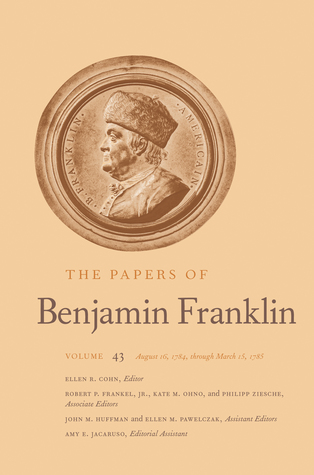
The Papers of Benjamin Franklin: Volume 43: August 16, 1784, through March 15, 1785
by Benjamin Franklin
The forty-third volume of the collected writings and correspondence of the American statesman, ambassador, and Founding Father Benjamin FranklinThe forty-third volume of the collected writings and correspondence of the American statesman, ambassador, and Founding Father Benjamin Franklin
In late August, 1784, Franklin, John Adams, and the newly arrived Thomas Jefferson began their congressional commission to negotiate treaties of amity and commerce with twenty nations. Of the countries they approached, only Prussia entered into negotiations. The Americans sent Prussia a treaty proposal based on the draft treaty that Franklin had negotiated with Denmark the previous year but which Congress had not acted upon. Jefferson rearranged the articles and simplified their language. To the two unprecedented humanitarian articles that Franklin had crafted in 1782, the American commissioners added a third, guaranteeing humane treatment of prisoners of war. Frederick II, understanding their historic nature, quickly approved the new articles. Also during the period of this volume, from August 16, 1784, through March 15, 1785, Franklin permitted his grandson Temple to visit his Loyalist father in London, apprenticed his younger grandson Benny to a type founder, invented a novel kind of sailboat, inspired a new musical instrument, and entertained the first aeronaut to cross the English Channel in a balloon. As the volume ends, John Jay writes a letter informing Franklin that his recall has finally been approved.
In late August, 1784, Franklin, John Adams, and the newly arrived Thomas Jefferson began their congressional commission to negotiate treaties of amity and commerce with twenty nations. Of the countries they approached, only Prussia entered into negotiations. The Americans sent Prussia a treaty proposal based on the draft treaty that Franklin had negotiated with Denmark the previous year but which Congress had not acted upon. Jefferson rearranged the articles and simplified their language. To the two unprecedented humanitarian articles that Franklin had crafted in 1782, the American commissioners added a third, guaranteeing humane treatment of prisoners of war. Frederick II, understanding their historic nature, quickly approved the new articles. Also during the period of this volume, from August 16, 1784, through March 15, 1785, Franklin permitted his grandson Temple to visit his Loyalist father in London, apprenticed his younger grandson Benny to a type founder, invented a novel kind of sailboat, inspired a new musical instrument, and entertained the first aeronaut to cross the English Channel in a balloon. As the volume ends, John Jay writes a letter informing Franklin that his recall has finally been approved.
BUY NOW
Hardcover, 640 pages
Published January 8th 2019 by Yale University Press
Subscribe
Get Bible verse every day in your inbox
Read on Mobile


Group of Brands


© 2026 Bibleportal.com All rights reserved.
Benjamin Franklin was an important conservative figure in the American Restoration Movement, especially as the leading antebellum conservative in the northern United States branch of the movement. He is notable as the early and lifelong mentor of Daniel Sommer, whose support of the 1889 Sand Creek Declaration set in motion events which led to the formal division of the Churches of Christ from the Disciples of Christ in 1906.
According to contemporary biographies "His early religious training was according to the Methodist faith, though he never belonged to any church until he united with the Disciples."
In 1856, Franklin began to publish the ultra-conservative American Christian Review, which he published until his death in 1878. Its influence, initially considerable, was said to have waned following the American Civil War. Franklin undertook a rigorous program of publication correspondence, and traveling lectures which took him to "many" U. S. states and Canada.
Franklin's last move was to Anderson, Indiana, where he lived from 1864 until his death.
... Show more