
- Bible
- Read the Bible
- Bible Versions
- Verse of the Day
- Reading Plans
- Verses by Topic
- Books of the Bible
- Bible Images
- Study
- Commentaries
- Concordances
- Dictionaries
- Encyclopedias
- Sermons
- Bible Atlas & Maps
- BP Wiki
- Devotionals
- Today's Devotionals
- Light of the World
- All Devotionals
- Inspirational Quotes
- More
- Picture Quotes
- Videos
- Inspirational
- Bible Study
- What The Bible Says
- Bible Q&As
- Daily Bread
- Bible by Genre
- Bible Stories
- Random Bible Verse
- Community
- Store
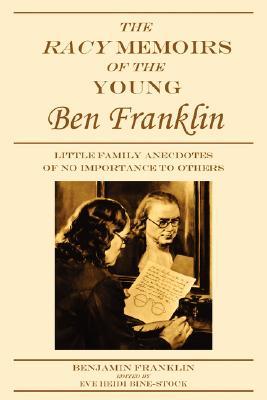
The Racy Memoirs of the Young Ben Franklin: Little Family Anecdotes of No Importance to Others
by Benjamin Franklin
Benjamin Franklin-racy? When we think of Franklin, we think of a statesman, an inventor, a man of worldly wisdom-and a man temperate in all his affairs. The last thing we think of is racy. But Franklin's own words, written in a letter to his son, tell of the scrapes, the tricks, the imbroglios and the intrigues that young Ben was party to. Did you know that Ben had to post bail for himself? Or that he was afraid of contracting a venereal disease? Did you know that he jilted a girl? And engaged in bribery? These "little family anecdotes of no importance to others," as Ben called them, make for great reading. And inspirational reading, as well, for from these anecdotes we learn that a great man is, after all, only human, and that a successful life is not without its mistakes, or "errata," as Ben called them. Without changing Franklin's words or spelling at all, the editor of this edition has broken Franklin's text down into "bite-sized" paragraphs, assigned memorable headings to his stories by selecting from the very words he used, and split the work into natural chapters with chapter headings. An index was also added. Finally, the work was laid out in a relatively large type, with plenty of white space so as not to overwhelm with the too-dense, too-daunting print of earlier editions of Franklin's autobiography. The result is an easy-to-read, easy-to-browse book, filled with memorable "family anecdotes" from one of our Founding Fathers.
BUY NOW
Paperback, 180 pages
Published January 31st 2007 by E & E Publishing
Subscribe
Get Bible verse every day in your inbox
Read on Mobile


Group of Brands


© 2026 Bibleportal.com All rights reserved.
Benjamin Franklin was an important conservative figure in the American Restoration Movement, especially as the leading antebellum conservative in the northern United States branch of the movement. He is notable as the early and lifelong mentor of Daniel Sommer, whose support of the 1889 Sand Creek Declaration set in motion events which led to the formal division of the Churches of Christ from the Disciples of Christ in 1906.
According to contemporary biographies "His early religious training was according to the Methodist faith, though he never belonged to any church until he united with the Disciples."
In 1856, Franklin began to publish the ultra-conservative American Christian Review, which he published until his death in 1878. Its influence, initially considerable, was said to have waned following the American Civil War. Franklin undertook a rigorous program of publication correspondence, and traveling lectures which took him to "many" U. S. states and Canada.
Franklin's last move was to Anderson, Indiana, where he lived from 1864 until his death.
... Show more