
- Bible
- Read the Bible
- Bible Versions
- Verse of the Day
- Reading Plans
- Verses by Topic
- Books of the Bible
- Bible Images
- Study
- Commentaries
- Concordances
- Dictionaries
- Encyclopedias
- Sermons
- Bible Atlas & Maps
- BP Wiki
- Devotionals
- Today's Devotionals
- Light of the World
- All Devotionals
- Inspirational Quotes
- More
- Picture Quotes
- Videos
- Inspirational
- Bible Study
- What The Bible Says
- Bible Q&As
- Daily Bread
- Bible by Genre
- Bible Stories
- Random Bible Verse
- Community
- Store
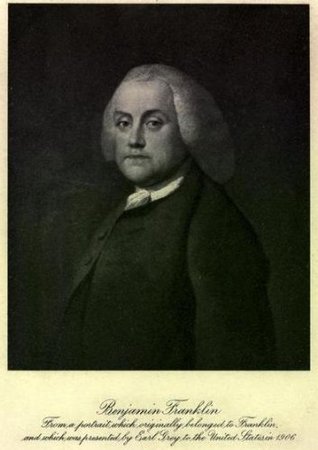
The writings of Benjamin Franklin V10
by Benjamin Franklin
PREFACE
SINCE the appearance of the first volume of this edition so many new documents have been discovered by the diligent investigations of scholars, and generously furnished from private collections, that it has become an embarrassing problem to include both the -new and the old within the limits of the work as originally proposed. I have been forced reluctantly to abandon my cherished plan of a comprehensive biography of Franklin, and to content myself with a more meagre outline of the story of his life. The publication of his works in their original integrity is the object of first importance, and to that end all other causes must give way. Moreover, Franklin's writings are his best biography, a fact recognized by Mr. Bigelow, who, in his "Life of Franklin," has allowed the great man through his Memoirs and his correspondence — " almost miraculously preserved from incalculable perils" — to tell his own story. In the sketch of personal and political history contained in the present volume, I have been as brief as was consistent with clearness, because I have had small space at my command, and because it has seemed unnecessary to quote from documents which exist in the previous volumes of this work.
In the writing of the biography I have been chiefly indebted to the late lamented Henri Doniol, whose monumental work, "Histoire de la Participation de la France a PEtablissement des Etats-Unis d'Amerique," is one of the triumphs of histori-
cal research. "The Life of Franklin," by James Parton, is a work of much labour and learning which has fallen into unmerited neglect. I have found the Vicomte de Noailles' " Ma-rins et Soldats Franfais en Ame'rique " frequently helpful.
The second centenary of the birth of Franklin was made in 1906 the occasion of extraordinary honours and unprecedented commemorations. Anniversary feasts and elaborate celebrations continued hi ever increasing interest in many parts of America, from their beginning in the first week of the year until their stately culmination hi the august proceedings of the month of April hi Paris and the splendid ceremonials of the same tune in Philadelphia. The State of Pennsylvania made a liberal appropriation to The American Philosophical Society to defray the cost of the latter celebration, at which one hundred and twenty-seven societies and institutions of learning in Europe and America were represented. A gold medal, designed by Louis and Augustus St. Gaudens, was struck by order of Congress and presented, under the direction of the President of the United States, to the Republic of France.
In Paris a statue of Franklin, the gift of Mr. John H. Harjes, was unveiled at the entrance into the Place du Trocade'ro of the rue Franklin, on which the philosopher and statesman dwelt during his stay at Passy. Two ex-presidents of the French Republic and one of the United States, distinguished officials and diplomatists of world-wide fame, constituted a Committee of Honour to add brilliancy to the fete. The celebration took place in the salle des etes of the Palace of the Trocade'ro in the presence of nearly five thousand persons and almost all the high officials of the French government and the ministers and ambassadors of foreign powers. A distinguished French orator and cabinet minister was chosen
by the French government to deliver a eulogy, and the editor of this work was appointed by President Roosevelt as the spokesman of the United States. I have drawn occasionally in the course of this volume upon my oration delivered upon that occasion, and I have sometimes quoted from a series of articles upon "Franklin's Social Life in France," contributed by me to Putnam's Monthly, for, as the old Greek proverb runs, Si? Se OVK evSe^erai.
SINCE the appearance of the first volume of this edition so many new documents have been discovered by the diligent investigations of scholars, and generously furnished from private collections, that it has become an embarrassing problem to include both the -new and the old within the limits of the work as originally proposed. I have been forced reluctantly to abandon my cherished plan of a comprehensive biography of Franklin, and to content myself with a more meagre outline of the story of his life. The publication of his works in their original integrity is the object of first importance, and to that end all other causes must give way. Moreover, Franklin's writings are his best biography, a fact recognized by Mr. Bigelow, who, in his "Life of Franklin," has allowed the great man through his Memoirs and his correspondence — " almost miraculously preserved from incalculable perils" — to tell his own story. In the sketch of personal and political history contained in the present volume, I have been as brief as was consistent with clearness, because I have had small space at my command, and because it has seemed unnecessary to quote from documents which exist in the previous volumes of this work.
In the writing of the biography I have been chiefly indebted to the late lamented Henri Doniol, whose monumental work, "Histoire de la Participation de la France a PEtablissement des Etats-Unis d'Amerique," is one of the triumphs of histori-
cal research. "The Life of Franklin," by James Parton, is a work of much labour and learning which has fallen into unmerited neglect. I have found the Vicomte de Noailles' " Ma-rins et Soldats Franfais en Ame'rique " frequently helpful.
The second centenary of the birth of Franklin was made in 1906 the occasion of extraordinary honours and unprecedented commemorations. Anniversary feasts and elaborate celebrations continued hi ever increasing interest in many parts of America, from their beginning in the first week of the year until their stately culmination hi the august proceedings of the month of April hi Paris and the splendid ceremonials of the same tune in Philadelphia. The State of Pennsylvania made a liberal appropriation to The American Philosophical Society to defray the cost of the latter celebration, at which one hundred and twenty-seven societies and institutions of learning in Europe and America were represented. A gold medal, designed by Louis and Augustus St. Gaudens, was struck by order of Congress and presented, under the direction of the President of the United States, to the Republic of France.
In Paris a statue of Franklin, the gift of Mr. John H. Harjes, was unveiled at the entrance into the Place du Trocade'ro of the rue Franklin, on which the philosopher and statesman dwelt during his stay at Passy. Two ex-presidents of the French Republic and one of the United States, distinguished officials and diplomatists of world-wide fame, constituted a Committee of Honour to add brilliancy to the fete. The celebration took place in the salle des etes of the Palace of the Trocade'ro in the presence of nearly five thousand persons and almost all the high officials of the French government and the ministers and ambassadors of foreign powers. A distinguished French orator and cabinet minister was chosen
by the French government to deliver a eulogy, and the editor of this work was appointed by President Roosevelt as the spokesman of the United States. I have drawn occasionally in the course of this volume upon my oration delivered upon that occasion, and I have sometimes quoted from a series of articles upon "Franklin's Social Life in France," contributed by me to Putnam's Monthly, for, as the old Greek proverb runs, Si? Se OVK evSe^erai.
BUY NOW
Kindle Edition, 661 pages
Published April 7th 2012
Subscribe
Get Bible verse every day in your inbox
Read on Mobile


Group of Brands


© 2026 Bibleportal.com All rights reserved.
Benjamin Franklin was an important conservative figure in the American Restoration Movement, especially as the leading antebellum conservative in the northern United States branch of the movement. He is notable as the early and lifelong mentor of Daniel Sommer, whose support of the 1889 Sand Creek Declaration set in motion events which led to the formal division of the Churches of Christ from the Disciples of Christ in 1906.
According to contemporary biographies "His early religious training was according to the Methodist faith, though he never belonged to any church until he united with the Disciples."
In 1856, Franklin began to publish the ultra-conservative American Christian Review, which he published until his death in 1878. Its influence, initially considerable, was said to have waned following the American Civil War. Franklin undertook a rigorous program of publication correspondence, and traveling lectures which took him to "many" U. S. states and Canada.
Franklin's last move was to Anderson, Indiana, where he lived from 1864 until his death.
... Show more