The Bible, God’s inspired word, is a great gift to us. God speaks to us. Even today.
But there are times we struggle with what it says.
There are times we wished that we knew more.
Good commentaries are worth every penny because they open up the Scriptures to us in helpful and accurate ways.
Spurgeon’s Bible Commentary is one such volume.
Produced by the “Prince of Preachers”, Charles Haddon Spurgeon, it provides great insight into the meaning of Scripture.
Spurgeon was Pastor of the Metropolitan Tabernacle (located near the Elephant & Castle in London) where he garnered a reputation as an inspired and eloquent preacher. When he preached lives were transformed by God.
This book is a collection of Spurgeon’s explanations on what the Bible is saying.
This is a worthwhile addition to your reference library and will be useful to you as you study God’s word, read it devotionally and apply what He says to you.

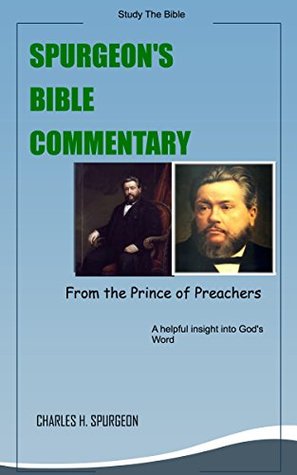


C.H. Spurgeon (1834 - 1892)
Spurgeon quickly became known as one of the most influential preachers of his time. Well known for his biblical powerful expositions of scripture and oratory ability. In modern evangelical circles he is stated to be the "Prince of Preachers." He pastored the Metropolitan Tabernacle in downtown London, England.His church was part of a particular baptist church movement and they defended and preached Christ and Him crucified and the purity of the Gospel message. Spurgeon never gave altar calls but always extended the invitation to come to Christ. He was a faithful minister in his time that glorified God and brought many to the living Christ.
Charles Haddon Spurgeon was England's best-known preacher for most of the second half of the nineteenth century. In 1854, just four years after his conversion, Spurgeon, then only 20, became pastor of London's famed New Park Street Church (formerly pastored by the famous Baptist theologian John Gill).
The congregation quickly outgrew their building, moved to Exeter Hall, then to Surrey Music Hall. In these venues Spurgeon frequently preached to audiences numbering more than 10,000 - all in the days before electronic amplification.
In 1861 the congregation moved permanently to the new Metropolitan Tabernacle.
... Show more