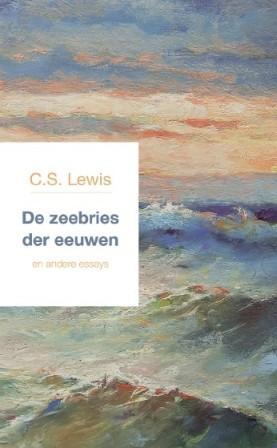
Twee weten meer dan één, en dat geldt speciaal voor mensen uit verschillende tijden, zegt C. S. Lewis (1898-1963) ergens in deze nieuwe bundel vertaalde essays. De bekende Britse schrijver, literatuurhistoricus en christelijk apologeet mag nu zelf gerekend worden tot de mensen uit een andere tijd. Des te beter laat zijn eigen werk zien hoe zinvol, boeiend en leesbaar boeken uit het verleden kunnen zijn.
"Je moet aantonen dat iemand fout zit voordat je begint uit te leggen hoe het komt dat hij fout zit"
"Onverkort 'jezelf zijn' is niet eerder geoorloofd dan wanneer we 'zelf' Gods kinderen zijn."
"Voor wat ik ervan begrijp, is het christendom niet getrouwd met een antropocentrische kijk op het heelal."
"Onthoud je van iedere gedachte over andermans fouten, tenzij de noodzaak daartoe zich aandient vanuit je plicht als ouder of leraar."
"Alle ware christelijke ascese bewaart een respect voor het afgewezene dat, naar ik meen, in heidense ascese nooit wordt aangetroffen."
"'Eerst moet die kiespijn zakken, eerder kan ik niet verder schrijven over het Lijden.' Maar wat weet ik nog van pijn die weg is?"
Deze voor het eerst vertaalde teksten van C.S. Lewis zijn een welkome uitbreiding van de in Nederland beschikbare uitgaven.



Clive Staples Lewis was born in Ireland, in Belfast on 29 November 1898. His mother was a devout Christian and made efforts to influence his beliefs. When she died in his early youth her influence waned and Lewis was subject to the musings and mutterings of his friends who were decidedly agnostic and atheistic. It would not be until later, in a moment of clear rationality that he first came to a belief in God and later became a Christian.
C. S. Lewis volunteered for the army in 1917 and was wounded in the trenches in World War I. After the war, he attended university at Oxford. Soon, he found himself on the faculty of Magdalen College where he taught Mediaeval and Renaissance English.
Throughout his academic career he wrote clearly on the topic of religion. His most famous works include the Screwtape Letters and the Chronicles of Narnia. The atmosphere at Oxford and Cambridge tended to skepticism. Lewis used this skepticism as a foil. He intelligently saw Christianity as a necessary fact that could be seen clearly in science.
"Surprised by Joy" is Lewis's autobiography chronicling his reluctant conversion from atheism to Christianity in 1931.
... Show more