
- Bible
- Read the Bible
- Bible Versions
- Verse of the Day
- Reading Plans
- Verses by Topic
- Books of the Bible
- Bible Images
- Study
- Commentaries
- Concordances
- Dictionaries
- Encyclopedias
- Sermons
- Bible Atlas & Maps
- BP Wiki
- Devotionals
- Today's Devotionals
- Light of the World
- All Devotionals
- Inspirational Quotes
- More
- Picture Quotes
- Videos
- Inspirational
- Bible Study
- What The Bible Says
- Bible Q&As
- Daily Bread
- Bible by Genre
- Bible Stories
- Random Bible Verse
- Community
- Store
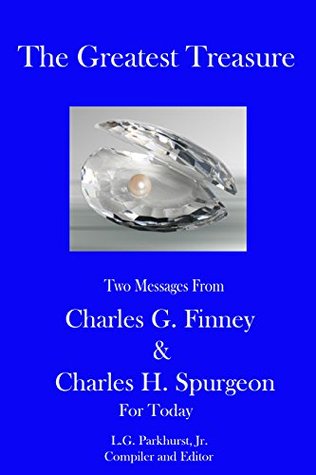
The Greatest Treasure: Two Messages from Charles G. Finney and Charles H. Spurgeon for Today (Finney and Spurgeon Face to Face Book 5)
by Charles Finney
The fifth book in the "Finney and Spurgeon Face to Face" series is "The Greatest Treasure," where the messages of Charles G. Finney and Charles H. Spurgeon come face to face. "The Greatest Treasure" teaches two of Jesus’ parables, sometimes called “The Treasure Found in the Field” and “The Pearl of Great Price.” In "The Greatest Treasure," Finney and Spurgeon agree on what it is and how to find it. Each preacher offers insights that the other does not teach, and each of their messages offers food for thought and truths that can be taught by others. Both agree that everyone should seek "The Greatest Treasure." They also agree on the cost of the treasure that the finder should pay, and what people will do when they find "The Greatest Treasure." Spurgeon’s sermon is longer and appropriately follows the sermon by Finney, almost as though the Holy Spirit led Spurgeon to expand on Finney’s teachings (I have no evidence that Spurgeon ever read this sermon by Finney).
Without question among Nineteenth Century preachers and revivalists, Finney was America’s greatest revivalist and Spurgeon was England’s greatest preacher. Charles Grandison Finney [1792-1875] has been considered America’s Greatest Revivalist. He also served as theological professor and president of Oberlin College, Oberlin, Ohio, which he helped found in 1833. Charles Haddon Spurgeon [1834-1892] has been considered the Prince of Preachers. He founded Spurgeon’s College in 1856 in London, England, which was named after him following his death. Both men led thousands to faith in Jesus Christ during their lifetimes, and both men influence students of the Bible, and Christian preachers, revivalists, and theologians today. These two great Bible expositors can be studied together by reading their sermons on the same Biblical themes. Often contrasted in secondary sources, with the books in the Finney and Spurgeon Face to Face series readers can compare as well as contrast these men by reading what they actually taught.
In 2014, Agion Press began the publication of a series of short books of two messages or two sermons each by these two great preachers on the same parable or scripture text. The first book in the series teaches Jesus’ parable on "The Rich Man and Lazarus" and the second book in the series teaches Jesus’ parable on "The Sower and the Seed." In "The Sower and the Seed" you will notice the emphasis that Charles Finney placed on the importance and value of the Seed, the Word of God; while Spurgeon expounded the effect of the Seed, the Word of God, in people’s lives. When the Word of God dwells in good hearts, believers will the will of God in everything. The third book in the series, "Will the Will of God When You Pray," teaches the relationship between sincere prayer and doing the will of God when you pray that the will of God be done: “Thy kingdom come, Thy will be done.” The fourth book in the series teaches Jesus’ parable on "The Prodigal Son," and includes a sermon by Charles Finney that he preached in 1854, when he was president of Oberlin College, to the college students, professors, and others in an academic setting. Spurgeon preached his sermon on "The Prodigal Son," in 1858 to a congregation of learned and unlearned people, where some also needed to unlearn falsehoods to learn the truth. Spurgeon emphasized how difficult it is to unlearn error in order to learn the truth. Spurgeon preached through the entire parable in a way that would speak to people of all backgrounds, and his sermon is an excellent complement to Finney’s message.
The sixth book is "The Mary and Martha Matrix."
In 1980, L.G.
Without question among Nineteenth Century preachers and revivalists, Finney was America’s greatest revivalist and Spurgeon was England’s greatest preacher. Charles Grandison Finney [1792-1875] has been considered America’s Greatest Revivalist. He also served as theological professor and president of Oberlin College, Oberlin, Ohio, which he helped found in 1833. Charles Haddon Spurgeon [1834-1892] has been considered the Prince of Preachers. He founded Spurgeon’s College in 1856 in London, England, which was named after him following his death. Both men led thousands to faith in Jesus Christ during their lifetimes, and both men influence students of the Bible, and Christian preachers, revivalists, and theologians today. These two great Bible expositors can be studied together by reading their sermons on the same Biblical themes. Often contrasted in secondary sources, with the books in the Finney and Spurgeon Face to Face series readers can compare as well as contrast these men by reading what they actually taught.
In 2014, Agion Press began the publication of a series of short books of two messages or two sermons each by these two great preachers on the same parable or scripture text. The first book in the series teaches Jesus’ parable on "The Rich Man and Lazarus" and the second book in the series teaches Jesus’ parable on "The Sower and the Seed." In "The Sower and the Seed" you will notice the emphasis that Charles Finney placed on the importance and value of the Seed, the Word of God; while Spurgeon expounded the effect of the Seed, the Word of God, in people’s lives. When the Word of God dwells in good hearts, believers will the will of God in everything. The third book in the series, "Will the Will of God When You Pray," teaches the relationship between sincere prayer and doing the will of God when you pray that the will of God be done: “Thy kingdom come, Thy will be done.” The fourth book in the series teaches Jesus’ parable on "The Prodigal Son," and includes a sermon by Charles Finney that he preached in 1854, when he was president of Oberlin College, to the college students, professors, and others in an academic setting. Spurgeon preached his sermon on "The Prodigal Son," in 1858 to a congregation of learned and unlearned people, where some also needed to unlearn falsehoods to learn the truth. Spurgeon emphasized how difficult it is to unlearn error in order to learn the truth. Spurgeon preached through the entire parable in a way that would speak to people of all backgrounds, and his sermon is an excellent complement to Finney’s message.
The sixth book is "The Mary and Martha Matrix."
In 1980, L.G.
BUY NOW
Kindle Edition, 34 pages
Published January 7th 2015 by Agion Press
Subscribe
Get Bible verse every day in your inbox
Read on Mobile


Group of Brands


© 2026 Bibleportal.com All rights reserved.
Charles Grandison Finney was a Presbyterian minister who became an important figure in the Second Great Awakening. His influence during this period was enough that he has been called "The Father of Modern Revivalism".
In addition to becoming a popular Christian evangelist, Finney was involved with the abolitionist movement and frequently denounced slavery from the pulpit.
Finney was known for his innovations in preaching and religious meetings, such as having women pray in public meetings of mixed gender, development of the "anxious seat" (a place where those considering becoming Christians could come to receive prayer), and public censure of individuals by name in sermons and prayers. He was also known for his use of extemporaneous preaching.
No man in his day and generation was more signally blessed of God in winning souls than Charles G. Finney. Thousands and tens of thousands in this and other lands were brought to Christ through his instrumentality. It is hoped that this brief study of his life and labors may stimulate others to renewed effort in seeking to bring men to a saving knowledge of Him who is our Redeemer and Lord.
... Show more