
- Bible
- Read the Bible
- Bible Versions
- Verse of the Day
- Reading Plans
- Verses by Topic
- Books of the Bible
- Bible Images
- Study
- Commentaries
- Concordances
- Dictionaries
- Encyclopedias
- Sermons
- Bible Atlas & Maps
- BP Wiki
- Devotionals
- Today's Devotionals
- Light of the World
- All Devotionals
- Inspirational Quotes
- More
- Picture Quotes
- Videos
- Inspirational
- Bible Study
- What The Bible Says
- Bible Q&As
- Daily Bread
- Bible by Genre
- Bible Stories
- Random Bible Verse
- Community
- Store
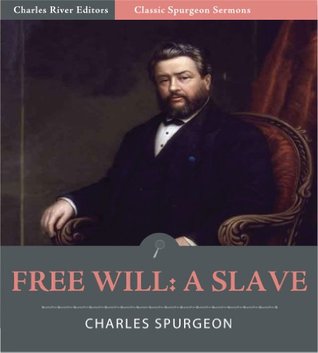
Classic Spurgeon Sermons: Free Will - A Slave (Illustrated)
by Charles Spurgeon
*Illustrated
*Includes Table of Contents
Charles Haddon Spurgeon (19 June 1834 – 31 January 1892) was a British Particular Baptist preacher who remains highly influential among Christians of different denominations, among whom he is still known as the "Prince of Preachers". Spurgeon was to 19th century England what D. L Moody was to America. Although Spurgeon never attended theological school, by the age of twenty-one he was the most popular preacher in London.
A strong figure in the Reformed Baptist tradition, defending the Church in agreement with the 1689 London Baptist Confession of Faith understanding, and opposing the liberal and pragmatic theological tendencies in the Church of his day, Spurgeon preached to around 10,000,000 people, often up to 10 times each week at different places. Spurgeon was the pastor of the congregation of the New Park Street Chapel (later the Metropolitan Tabernacle) in London for 38 years, despite the fact he was part of several controversies with the Baptist Union of Great Britain and later had to leave the denomination. In 1857, he started a charity organization called Spurgeon's which now works globally, and he also founded Spurgeon's College, which was named after him posthumously.
Spurgeon was a prolific author of many types of works, including sermons, an autobiography, commentaries, books on prayer, devotionals, magazines, poetry, hymns and more.
This edition of Spurgeon’s Free Will—A Slave is specially formatted with a Table of Contents and is illustrated with over a dozen pictures of Spurgeon and depictions of his sermons.
*Includes Table of Contents
Charles Haddon Spurgeon (19 June 1834 – 31 January 1892) was a British Particular Baptist preacher who remains highly influential among Christians of different denominations, among whom he is still known as the "Prince of Preachers". Spurgeon was to 19th century England what D. L Moody was to America. Although Spurgeon never attended theological school, by the age of twenty-one he was the most popular preacher in London.
A strong figure in the Reformed Baptist tradition, defending the Church in agreement with the 1689 London Baptist Confession of Faith understanding, and opposing the liberal and pragmatic theological tendencies in the Church of his day, Spurgeon preached to around 10,000,000 people, often up to 10 times each week at different places. Spurgeon was the pastor of the congregation of the New Park Street Chapel (later the Metropolitan Tabernacle) in London for 38 years, despite the fact he was part of several controversies with the Baptist Union of Great Britain and later had to leave the denomination. In 1857, he started a charity organization called Spurgeon's which now works globally, and he also founded Spurgeon's College, which was named after him posthumously.
Spurgeon was a prolific author of many types of works, including sermons, an autobiography, commentaries, books on prayer, devotionals, magazines, poetry, hymns and more.
This edition of Spurgeon’s Free Will—A Slave is specially formatted with a Table of Contents and is illustrated with over a dozen pictures of Spurgeon and depictions of his sermons.
BUY NOW
Kindle Edition, 28 pages
Published January 27th 2012 (first published March 24th 2010)
Subscribe
Get Bible verse every day in your inbox
Read on Mobile


Group of Brands


© 2026 Bibleportal.com All rights reserved.
He was converted to Christ at the age of 16 and immediately began preaching. He preached in the streets and in the fields before he was 21. In his first church, he began with 100 members. It grew until he was preaching to 10,000 people in the Surrey Music Hall. His church, the Metropolitan Tabernacle, seated 6,000 people. He withdrew from every movement among English Baptists which tended to criticize the Authorized Version 1611 in any way.
Before his death, he published more than 2,000 sermons and 49 volumes of commentaries, sayings, anecdotes, illustrations, and devotions.
... Show more