
- Bible
- Read the Bible
- Bible Versions
- Verse of the Day
- Reading Plans
- Verses by Topic
- Books of the Bible
- Bible Images
- Study
- Commentaries
- Concordances
- Dictionaries
- Encyclopedias
- Sermons
- Bible Atlas & Maps
- BP Wiki
- Devotionals
- Today's Devotionals
- Light of the World
- All Devotionals
- Inspirational Quotes
- More
- Picture Quotes
- Videos
- Inspirational
- Bible Study
- What The Bible Says
- Bible Q&As
- Daily Bread
- Bible by Genre
- Bible Stories
- Random Bible Verse
- Community
- Store
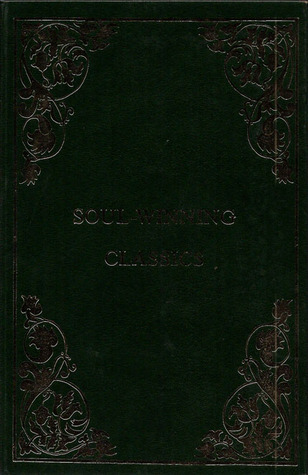
The Fifty Greatest Christian Classics Series - Vol 4: Soul-Winning Classics
by Charles Spurgeon
The object of this volume, with it's twelve differing approaches, is to supply the reader with a scriptural definition of soul-winning, some directions to witnesses, and some conditioning for the task. There are three booksdirectly concerned with the art and practice of Soul-Winning; three books that make an appeal to the unconverted to awake and be saved before the threatenings of God's Law take effect. There are two books defining the necessity of repentance, and one book showing that the power of conversion does not rest in human will, but is in the hands of a gracious God through Jesus Christ. There are three books which depict the sinfulness of the unconverted, and the hope and joy of the converted after God has given new life and has cleansed the soul.First is Charles Spurgeon's Soul Winner in which readers will see the man at his most fervent and eloquent role as a winner of souls.
Joseph Alleine's Alarm to the Unconverted is included, a book so powerful that it has been through over 300 printings (more than any Christian Classic except for Pilgrim's Progress). Thousands, over the centuries, have been converted through reading this book.
Richard Baxter's A Call to the Unconverted calls on every parent to read this book to their children, or have their older children read this book.
Then for those who think they can save themselves, Martin Luther's Bondage of the Will is included.
Many today in modern America do not think that repentance or turning from one's sins is necessary to salvation so Thomas Boston's Repentance is included
For those who regularly work with the unconverted daily, two more are included: The Art of Man-Fishing by Thomas Boston and Words toWinners of Souls by Horatius Bonar.
Finally, There are four titles by Thomas Goodwin including; On Repentance, The Vanity of Thoughts, Let Patience Have It's Perfect Work, and The Return of Prayers
Beautifully bound in bonded leather with gold foil print on the spine and front cover and newly typeset. A rich gift that will last centuries.
Joseph Alleine's Alarm to the Unconverted is included, a book so powerful that it has been through over 300 printings (more than any Christian Classic except for Pilgrim's Progress). Thousands, over the centuries, have been converted through reading this book.
Richard Baxter's A Call to the Unconverted calls on every parent to read this book to their children, or have their older children read this book.
Then for those who think they can save themselves, Martin Luther's Bondage of the Will is included.
Many today in modern America do not think that repentance or turning from one's sins is necessary to salvation so Thomas Boston's Repentance is included
For those who regularly work with the unconverted daily, two more are included: The Art of Man-Fishing by Thomas Boston and Words toWinners of Souls by Horatius Bonar.
Finally, There are four titles by Thomas Goodwin including; On Repentance, The Vanity of Thoughts, Let Patience Have It's Perfect Work, and The Return of Prayers
Beautifully bound in bonded leather with gold foil print on the spine and front cover and newly typeset. A rich gift that will last centuries.
BUY NOW
Hardcover, 753 pages
Published November 1990 by Sovereign Grace Publishers
Subscribe
Get Bible verse every day in your inbox
Read on Mobile


Group of Brands


© 2026 Bibleportal.com All rights reserved.
He was converted to Christ at the age of 16 and immediately began preaching. He preached in the streets and in the fields before he was 21. In his first church, he began with 100 members. It grew until he was preaching to 10,000 people in the Surrey Music Hall. His church, the Metropolitan Tabernacle, seated 6,000 people. He withdrew from every movement among English Baptists which tended to criticize the Authorized Version 1611 in any way.
Before his death, he published more than 2,000 sermons and 49 volumes of commentaries, sayings, anecdotes, illustrations, and devotions.
... Show more