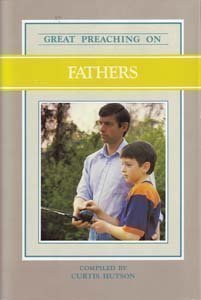
Dr. Rice once said that man, as God's deputy, is head of the home. The father is a picture of God to the children. The father is God's earthly picture of Himself. The father is to lead in disciplining the children. The father should lead in family worship. God expects men to lead in the home, the church and the nation. Some unfortunate mothers have discovered the difficult task of trying to raise a Christian family without a Christian father. In selecting sermons for this book we discovered that not too many sermons were available, and it was no easy task to compile enough sermons for a book on this title. However, we believe the sermons contained in these pages are some of the best ever preached. We trust and pray that they will be a blessing to all who read them.



Curtis Hutson was an Independent Baptist pastor and editor of The Sword of the Lord (1980-1995). While working as a mail carrier, Hutson preached at church services and revivals in the Atlanta area. In 1956 he conducted a revival at the tiny Forrest Hills Baptist Church of Scottdale. By the end of the week, Hutson had filled the fifty seats in the church, the pastor had resigned, and Hutson was called to replace him. Although he had no formal training, Hutson served as pastor while continuing to work for the post office.
He began to preach about soul winning, and his congregation began to follow his example. In 1967 Hutson quit the post office to become a full-time pastor--at first for a salary of $75 a month. Between 1969 and 1972, the church grew from 350 to 2,300 members. In 1976, when Hutson resigned after 20 years of pastoring, church membership was 7,900. Entering full-time evangelism, Hutson held area-wide evangelistic meetings from 1977 to 1980. From 1974 to 1980, he also served as president of the now defunct Baptist University of America near Atlanta.
As a fundamentalist he held to the great cardinal doctrines of the Faith: the verbal inspiration of the Bible in its original autographs; the virgin birth and deity of Christ; His vicarious death for sin; His physical resurrection; salvation by grace through faith; and the visible second coming of Christ. He was a believer in ecclesiastical and personal separation.
... Show more