
- Bible
- Read the Bible
- Bible Versions
- Verse of the Day
- Reading Plans
- Verses by Topic
- Books of the Bible
- Bible Images
- Study
- Commentaries
- Concordances
- Dictionaries
- Encyclopedias
- Sermons
- Bible Atlas & Maps
- BP Wiki
- Devotionals
- Today's Devotionals
- Light of the World
- All Devotionals
- Inspirational Quotes
- More
- Picture Quotes
- Videos
- Inspirational
- Bible Study
- What The Bible Says
- Bible Q&As
- Daily Bread
- Bible by Genre
- Bible Stories
- Random Bible Verse
- Community
- Store
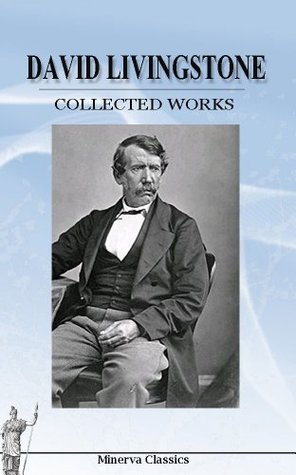
Collected Works of David Livingstone
by David Livingstone
“Collected Works of David Livingstone” Contains:
•An aesthetic cover page.
•A beginning click-able Table of Contents for all titles.
•Inner click-able Tables of Contents for all individual books with multiple chapters.
•Nicely organized chapters and text.
Author’s works include:
•A POPULAR ACCOUNT OF DR. LIVINGSTONE’S EXPEDITION TO THE ZAMBESI AND ITS TRIBUTARIES
•MISSIONARY TRAVELS AND RESEARCHES IN SOUTH AFRICA
Wikipedia on David Livingstone
David Livingstone (19 March 1813 – 1 May 1873) was a Scottish Congregationalist pioneer medical missionary with the London Missionary Society and an explorer in Africa. His meeting with H. M. Stanley on 10 November 1871 gave rise to the popular quotation "Dr. Livingstone, I presume?"
Perhaps one of the most popular national heroes of the late 19th century in Victorian Britain, Livingstone had a mythic status, which operated on a number of interconnected levels: Protestant missionary martyr, working-class "rags to riches" inspirational story, scientific investigator and explorer, imperial reformer, anti-slavery crusader, and advocate of commercial empire.
His fame as an explorer helped drive forward the obsession with discovering the sources of the River Nile that formed the culmination of the classic period of European geographical discovery and colonial penetration of the African continent. At the same time his missionary travels, "disappearance" and death in Africa, and subsequent glorification as posthumous national hero in 1874 led to the founding of several major central African Christian missionary initiatives carried forward in the era of the European "Scramble for Africa".
•An aesthetic cover page.
•A beginning click-able Table of Contents for all titles.
•Inner click-able Tables of Contents for all individual books with multiple chapters.
•Nicely organized chapters and text.
Author’s works include:
•A POPULAR ACCOUNT OF DR. LIVINGSTONE’S EXPEDITION TO THE ZAMBESI AND ITS TRIBUTARIES
•MISSIONARY TRAVELS AND RESEARCHES IN SOUTH AFRICA
Wikipedia on David Livingstone
David Livingstone (19 March 1813 – 1 May 1873) was a Scottish Congregationalist pioneer medical missionary with the London Missionary Society and an explorer in Africa. His meeting with H. M. Stanley on 10 November 1871 gave rise to the popular quotation "Dr. Livingstone, I presume?"
Perhaps one of the most popular national heroes of the late 19th century in Victorian Britain, Livingstone had a mythic status, which operated on a number of interconnected levels: Protestant missionary martyr, working-class "rags to riches" inspirational story, scientific investigator and explorer, imperial reformer, anti-slavery crusader, and advocate of commercial empire.
His fame as an explorer helped drive forward the obsession with discovering the sources of the River Nile that formed the culmination of the classic period of European geographical discovery and colonial penetration of the African continent. At the same time his missionary travels, "disappearance" and death in Africa, and subsequent glorification as posthumous national hero in 1874 led to the founding of several major central African Christian missionary initiatives carried forward in the era of the European "Scramble for Africa".
BUY NOW
Kindle Edition
Published March 22nd 2014 by Minerva Classics
Subscribe
Get Bible verse every day in your inbox
Read on Mobile


Group of Brands


© 2026 Bibleportal.com All rights reserved.
Livingstone was a Scottish missionary and one of the greatest European explorers of Africa, whose opening up the interior of the continent contributed to the 'Scramble for Africa'.
David Livingstone was born at Blantyre. At 10 he began working in the local cotton mill, with school lessons in the evenings. In 1836, he began studying medicine and theology in Glasgow and decided to become a missionary doctor. In 1841, he was posted to the edge of the Kalahari Desert in southern Africa.
Perhaps one of the most popular national heroes of the late 19th century in Victorian Britain, Livingstone had a mythic status: that of Protestant missionary martyr, that of working-class "rags to riches" inspirational story, that of scientific investigator and explorer, that of imperial reformer, and anti-slavery crusader.
Livingstone became convinced of his mission to reach new peoples in the interior of Africa and introduce them to Christianity, as well as freeing them from slavery. It was this which inspired his explorations.
He died on 1 May 1873. His body was taken back to England and buried in Westminster Abbey.
... Show more