Originally Published in 1891
The title of this book will assure the reader that its subject, at least, is one of great importance. It is, however brief, a connected argument in behalf of the positions, first, that Nature is, in its every detail, a witness for God; secondly, that its teaching is symbolic, as largely the Old Testament also, the first written revelation, is known to be; thirdly, that it needs, therefore, an interpreter, as it is contrary to all rules of hermeneutics that parables should define doctrine; fourthly, that Scripture must therefore be the interpreter of Nature, and not the reverse; fifthly, that if Nature be indeed a witness to God and yet its witness be of this character, the thought that Scripture is not intended to teach science must be very guardedly applied.
After this, the way being opened for an unprejudiced appeal to it, it is sought to show that there is in Nature, as in Scripture, a numerical system, which, as interpreted by Scripture, speaks with no uncertain sound of its true meaning, — mapping out its divisions, defining the relation of one to another and to the whole, while demonstrating that spiritual law reigns everywhere in the natural world, and that Nature not only witnesses to God, but definitely to the God and Father of our Lord Jesus Christ, and to the truth of Scripture,

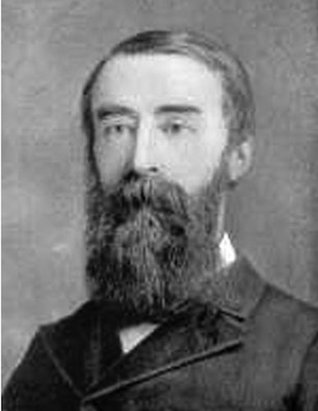


F. W. Grant was born in the Putney district of London, on 25th July, 1834. His conversion was occasioned by the reading of the Scriptures himself, and not through the instrumentality of others. He was educated at King�s College School with the expectation of securing a position in the War Office. The necessary influence for this failing, he went to Canada when he was twenty-one years of age.
At the time he came to Canada the Church of England was opening parishes in the new parts of the country, and he was examined and ordained to the ministry without having taken the regular college course. He left the 'systems' on receiving light through the reading of the literature published by so-called 'brethren', and lived for a time in Toronto, afterwards coming to the United States, where he lived in the city of Brooklyn, and then in Plainfield, N.J., till his death. He was the leader in what is known as 'the Grant party' in America.
... Show more