
- Bible
- Read the Bible
- Bible Versions
- Verse of the Day
- Reading Plans
- Verses by Topic
- Books of the Bible
- Bible Images
- Study
- Commentaries
- Concordances
- Dictionaries
- Encyclopedias
- Sermons
- Bible Atlas & Maps
- BP Wiki
- Devotionals
- Today's Devotionals
- Light of the World
- All Devotionals
- Inspirational Quotes
- More
- Picture Quotes
- Videos
- Inspirational
- Bible Study
- What The Bible Says
- Bible Q&As
- Daily Bread
- Bible by Genre
- Bible Stories
- Random Bible Verse
- Community
- Store
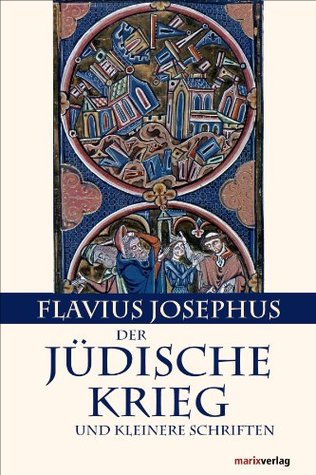
Der Jüdische Krieg und Kleinere Schriften: Mit der Paragraphenzählung nach Benedict Niese
by Flavius Josephus
Das Standardwerk vom "Herodot des Judentums" Mit Paragraphenzählung nach Flavii Josephi Opera Recognovit Benedictus Niese (Editio Minor) Mitreißend und dabei dennoch den historischen Tatsachen verpflichtet schildert der wegweisende römisch-jüdische Chronist Flavius Josephus in seinem monumentalen Werk die dramatischen Ereignisse des Aufstandes der Juden gegen die römische Fremdherrschaft im Jahr 66 n. Chr., den er selbst als Augenzeuge im Gefolge des Heerführers Titus miterlebte. Flankiert wird dieses Standardwerk von zwei kleineren Schriften des Josephus: Der Selbstbiographie, in der er minutiös von seiner Herkunft, seinem Werdegang und seinen Kriegserlebnissen berichtet, sowie der Verteidigungsschrift Gegen Apion, die gegen judenfeindliche antike Autoren Stellung bezieht. Für die Erhellung der Geschichte des Judentums im 1. Jahrhundert n. Chr. sind die erhaltenen Werke des jüdischen Chronisten Flavius Josephus von unschätzbarem Wert. Im Jüdischen Krieg, seinem ersten Werk, berichtet Josephus akribisch von den Ereignissen, die beginnend mit der Besetzung Jerusalems um 174 v. Chr. zu dem langen und entbehrungsreichen Kampf der Juden gegen die Fremdherrschaft Roms führten. Daran angeschlossen sind zwei kleinere Schriften, von Josephus, die Selbstbiographie und die Verteidigungsschrift Gegen Apion. Sie zeigen, dass der Historiograph zugleich ein Talent für den gallig-amüsanten, scharfzüngigen Ton besitzt. Wissenschaftlich betreut, mit der Paragraphenzählung nach Benedikt Niese, einem Vorwort sowie einem ausführlichen Namenregister versehen wurde die Ausgabe von Prof. Dr. Michael Tilly.
BUY NOW
Kindle Edition, 688 pages
Published October 29th 2012 by marixverlag
Subscribe
Get Bible verse every day in your inbox
Read on Mobile


Group of Brands


© 2026 Bibleportal.com All rights reserved.
Flavius Josephus was born Joseph ben Mattathias in Jerusalem in 37 CE a few years after the time of Jesus, during the time of the Roman occupation of the Jewish homeland. In his early twenties he was sent to Rome to negotiate the release of several priests held hostage by Emperor Nero. When he returned home after completing his mission he found the nation beginning a revolution against the Romans.
Despite his foreboding that the cause was hopeless, he was drafted into becoming commander of the revolutionary forces in Galilee, where he spent more time controlling internal factions than fighting the Roman army. When the city of Jotapata he was defending fell to the Roman general Vespasian, Josephus and his supporters hid in a cave and entered into a suicide pact, which Josephus oddly survived.
Taken prisoner by Vespasian, Josephus presented himself as a prophet. Noting that the war had been propelled by an ancient oracle that foretold a world ruler would arise from Judaea, Josephus asserted that this referred to Vespasian, who was destined to become Emperor of Rome. Intrigued, Vespasian spared his life. When this prophecy came true, and Vespasian became Emperor, he rewarded Josephus handsomely, freeing him from his chains and eventually adopting him into his family, the Flavians. Josephus thus became Flavius Josephus.
During the remainder of the war, Josephus assisted the Roman commander Titus, Vespasian's son, with understanding the Jewish nation and in negotiating with the revolutionaries. Called a traitor, he was unable to persuade the defenders of Jerusalem to surrender to the Roman siege, and instead became a witness to the destruction of the city and the Holy Temple.
Living at the Flavian court in Rome, Josephus undertook to write a history of the war he had witnessed. The work, while apparently factually correct, also served to flatter his patron and to warn other provinces against the folly of opposing the Romans. He first wrote in his native language of Aramaic, then with assistance translated it into Greek (the most-used language of the Empire). It was published a few years after the end of the war, in about 78 CE. He was about 40 years old.
Josephus subsequently improved his language skills and undertook a massive work in Greek explaining the history of the Jews to the general non-Jewish audience. He emphasized that the Jewish culture and Bible were older than any other then existing, hence called his work the Jewish Antiquities. Approximately half the work is a rephrasing of the Hebrew Bible, while much of the rest draws on previous historians. This work was published in 93 or 94 CE, when he was about 56 years old.
Josephus wrote at least two smaller books, including his autobiography, in which he recounts his life from birth until the writing of the Antiquities. The year he died is unknown.
... Show more