"Francis Bacon (1561-1626) kötete az Esszék avagy tanácsok az okos és erkölcsös életre nagyrészt barokk fejedelmeknek átnyújtott intelemcsokor. Ám az írások időszerűségét modernségét mi sem bizonyítja jobban, mint hogy olvasásuk közben uralkodó élményünk a meglepett ráismerés: olyan embertípusok, magatartásformák, társadalmi jelenségek tűnnek elébünk lapjaikon lépten-nyomon, amelyeket könnyű, sőt egyenesen csábító személyes ismerősök, közszereplő kortársak nevével, jelenünk tendenciáival, eseményeivel behelyettesítenünk. Nagy és világirodami jelentőségű mű ez az esszégyűjtemény, mert bár egy adott történelmi-politikai helyzet, kor belső igényeiből fakadt, írója mégis képes volt behatolni a mozgékony-tünékeny felszín alá, fenntartva az emberiség és emberség korszakokon átnyúló folyamatosságának az értékek tartósságának tudatát: a humanizmus lényegét hirdetve s testesítve meg."

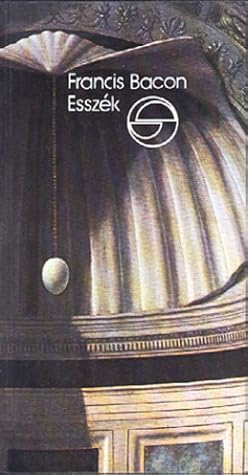


Sir Francis Bacon, 1st Viscount St Alban KC, son of Nicholas Bacon by his second wife Anne (Cooke) Bacon, was an English philosopher, statesman, scientist, lawyer, jurist, and author. He served both as Attorney General and Lord Chancellor of England. Although his political career ended in disgrace, he remained extremely influential through his works, especially as philosophical advocate and practitioner of the scientific revolution. Bacon was knighted in 1603, created Baron Verulam in 1618, and Viscount St Alban in 1621.
There are some scholars who believe that Bacon's vision for a Utopian New World in North America was laid out in his novel The New Atlantis, which depicts a mythical island, Bensalem, in the Pacific Ocean west of Peru. He envisioned a land where there would be greater rights for women, the abolishing of slavery, elimination of debtors' prisons, separation of church and state, and freedom of religious and political expression. Francis Bacon played a leading role in creating the British colonies, especially in Virginia, the Carolinas, and Newfoundland.
Thomas Jefferson considered Francis Bacon to be one of the three greatest men who ever lived, "Bacon, Locke and Newton" were "the three greatest men that have ever lived, without any exception." Francis Bacon's influence can also be seen on a variety of religious and spiritual authors, and on groups that have utilized his writings in their own belief systems.
... Show more