
- Bible
- Read the Bible
- Bible Versions
- Verse of the Day
- Reading Plans
- Verses by Topic
- Books of the Bible
- Bible Images
- Study
- Commentaries
- Concordances
- Dictionaries
- Encyclopedias
- Sermons
- Bible Atlas & Maps
- BP Wiki
- Devotionals
- Today's Devotionals
- Light of the World
- All Devotionals
- Inspirational Quotes
- More
- Picture Quotes
- Videos
- Inspirational
- Bible Study
- What The Bible Says
- Bible Q&As
- Daily Bread
- Bible by Genre
- Bible Stories
- Random Bible Verse
- Community
- Store
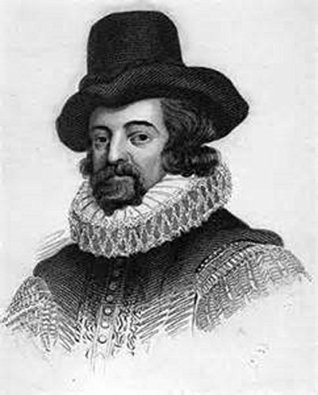
Meditationes Sacrae (Illustrated)
by Francis Bacon
The book has an active table of contents for easy access to each volume and section.
Francis Bacon was a great English philosopher and one of the founders of the modern system of political philosophy. He is in the row with the greatest thinkers as Isaac Newton, John Locke, Immanuel Kant, Thomas Hobbes, and Jean Rousseau. Their collected thoughts have had strong influence on building the foundation of the United States and its endeavor of open society.
Francis Bacon’s Meditationes Sacrae was published in 1597. It is regarded as one of the most important religious writings by Bacon. The book is seen as an effort by Bacon, a non-atheist, who attempted to mediate the reformed English church between the two extremes of Popish superstition and profane superstition. Although Bacon was working on replacing Aristotle with his own inductive method for discovering the truths of nature, Bacon’s argument in the book was to place the Anglican Church between the two extremes by borrowing from Aristotle concept of virtue flanked by its two respective vices. Bacon declared in this book his positions as the follows: “Ye err, not knowing the Scriptures nor the power of God (Matthew XXII:29). THIS canon is the mother of all canons against heresy: the causes of error are two; the ignorance of the will of God, and the ignorance or not sufficient consideration of his power; the will of God is more revealed by the Scriptures, and therefore the precept is, ‘Search the Scriptures;’ the will of God is more revealed by the creatures, and therefore the precept is, ‘Behold and consider the creatures:’ so is the fulness of the power of God to be affirmed, as we make no imputation to his will; so is the goodness of the will of God to be affirmed, as we make no derogation from his power: therefore true religion seated in the mean betwixt superstition, with superstitious heresies on the one side, and atheism with profane heresies on the other; superstition, rejecting the light of the Scriptures, and giving itself over to ungrounded traditions, and writings doubtful and not canonical, or to new revelations, or to untrue interpretations of the Scriptures, themselves do forge and dream many things of the will of God, which are strange and far distant from the true sense of the Scriptures; but atheism and theomachy rebelleth and mutinieth against the power of God, giving no faith to his word which revealeth his will, upon a discredit and unbelief of his power to whom all things are possible.”
Bacon is forever remembered as essential enabler, reformer, philosophical advocate, and practitioner of the scientific method during the scientific revolution through his extremely influential works. His works have produced great influence on modern science. His view to the real world became widely recognised as the foremost philosophical and scientific voice. Bacon’s influence has been felt in nearly every field of the humanities and sciences.
This book is one of the most important ones about the thoughts of philosophic methodology, science, and religions to understand nature by Francis Bacon, one of the greatest thinkers of modern philosophy and scientists on the planet.
Francis Bacon was a great English philosopher and one of the founders of the modern system of political philosophy. He is in the row with the greatest thinkers as Isaac Newton, John Locke, Immanuel Kant, Thomas Hobbes, and Jean Rousseau. Their collected thoughts have had strong influence on building the foundation of the United States and its endeavor of open society.
Francis Bacon’s Meditationes Sacrae was published in 1597. It is regarded as one of the most important religious writings by Bacon. The book is seen as an effort by Bacon, a non-atheist, who attempted to mediate the reformed English church between the two extremes of Popish superstition and profane superstition. Although Bacon was working on replacing Aristotle with his own inductive method for discovering the truths of nature, Bacon’s argument in the book was to place the Anglican Church between the two extremes by borrowing from Aristotle concept of virtue flanked by its two respective vices. Bacon declared in this book his positions as the follows: “Ye err, not knowing the Scriptures nor the power of God (Matthew XXII:29). THIS canon is the mother of all canons against heresy: the causes of error are two; the ignorance of the will of God, and the ignorance or not sufficient consideration of his power; the will of God is more revealed by the Scriptures, and therefore the precept is, ‘Search the Scriptures;’ the will of God is more revealed by the creatures, and therefore the precept is, ‘Behold and consider the creatures:’ so is the fulness of the power of God to be affirmed, as we make no imputation to his will; so is the goodness of the will of God to be affirmed, as we make no derogation from his power: therefore true religion seated in the mean betwixt superstition, with superstitious heresies on the one side, and atheism with profane heresies on the other; superstition, rejecting the light of the Scriptures, and giving itself over to ungrounded traditions, and writings doubtful and not canonical, or to new revelations, or to untrue interpretations of the Scriptures, themselves do forge and dream many things of the will of God, which are strange and far distant from the true sense of the Scriptures; but atheism and theomachy rebelleth and mutinieth against the power of God, giving no faith to his word which revealeth his will, upon a discredit and unbelief of his power to whom all things are possible.”
Bacon is forever remembered as essential enabler, reformer, philosophical advocate, and practitioner of the scientific method during the scientific revolution through his extremely influential works. His works have produced great influence on modern science. His view to the real world became widely recognised as the foremost philosophical and scientific voice. Bacon’s influence has been felt in nearly every field of the humanities and sciences.
This book is one of the most important ones about the thoughts of philosophic methodology, science, and religions to understand nature by Francis Bacon, one of the greatest thinkers of modern philosophy and scientists on the planet.
BUY NOW
Kindle Edition, 48 pages
Published September 15th 2015 by www.WealthOfNation.com
Subscribe
Get Bible verse every day in your inbox
Read on Mobile


Group of Brands


© 2026 Bibleportal.com All rights reserved.
Sir Francis Bacon, 1st Viscount St Alban KC, son of Nicholas Bacon by his second wife Anne (Cooke) Bacon, was an English philosopher, statesman, scientist, lawyer, jurist, and author. He served both as Attorney General and Lord Chancellor of England. Although his political career ended in disgrace, he remained extremely influential through his works, especially as philosophical advocate and practitioner of the scientific revolution. Bacon was knighted in 1603, created Baron Verulam in 1618, and Viscount St Alban in 1621.
There are some scholars who believe that Bacon's vision for a Utopian New World in North America was laid out in his novel The New Atlantis, which depicts a mythical island, Bensalem, in the Pacific Ocean west of Peru. He envisioned a land where there would be greater rights for women, the abolishing of slavery, elimination of debtors' prisons, separation of church and state, and freedom of religious and political expression. Francis Bacon played a leading role in creating the British colonies, especially in Virginia, the Carolinas, and Newfoundland.
Thomas Jefferson considered Francis Bacon to be one of the three greatest men who ever lived, "Bacon, Locke and Newton" were "the three greatest men that have ever lived, without any exception." Francis Bacon's influence can also be seen on a variety of religious and spiritual authors, and on groups that have utilized his writings in their own belief systems.
... Show more