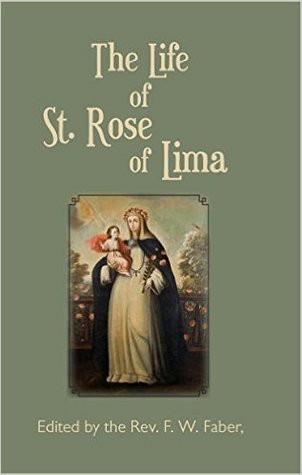
First flower of the desert wild, Whose leaves the sweets of grace exhale, We grant thee, Lima's sainted child - Rose of America - all hail! No words can express the emotions which this history of the Virgin, St. Rose of Lima, will awaken in truly Christian hearts that love Jesus Christ, his ever blessed Church, and their native land. How wonderful is God in his Saints, will be the exclamation at almost every page. Next to God's own word in the Sacred Scriptures, nothing so touches the heart, enlightens the soul, and rouses up even the most slothful to a sense of all we owe to our Redeemer and never can repay, as the reading of the lives of the saints, the contemplation of the virtues, sufferings and triumphs of such a child of the Church as is here presented to us. And St. Rose is only one of that innumerable host of witnesses who, whether living on earth or reigning in heaven, testify to the truth, the holiness, the divinity of that faith we profess.



Frederick William Faber, British hymn writer and theologian, was born at Calverley, Yorkshire, where his grandfather, Thomas Faber, was vicar. Faber attended the grammar school of Bishop Auckland for a short time, but a large portion of his boyhood was spent in Westmorland. He afterwards went to Harrow and Balliol College, Oxford. In 1835, he obtained a scholarship at University College. In 1836, he won the Newdigate Prize for a poem on "The Knights of St John," which elicited special praise from John Keble. Among his college friends were Dean Stanley and Roundell Palmer, 1st Earl of Selborne.
Among his best-known hymns are: "Souls of Men, Why Will Ye Scatter", "Faith of Our Fathers", and "My God, How Wonderful Thou Art".
... Show more