There are certain great events and critical seasons in history, on which we see that a great deal depends. We find their consequences running out in all directions, and still in activity hundreds of years afterwards. The Reformation is one of these mighty events. We may go along the course of English history calm and unmoved, getting, so dull are we, very often little or no religion out of it. But when we come to the Reformation, it is like the burning bush in the wilderness: the most thoughtless are constrained to turn out of their way to see this great thing.

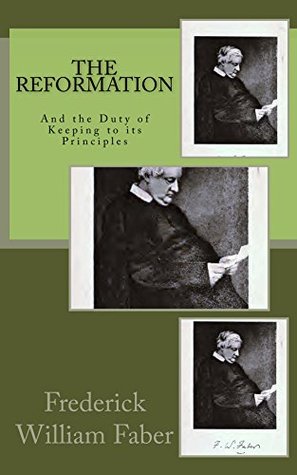


Frederick William Faber, British hymn writer and theologian, was born at Calverley, Yorkshire, where his grandfather, Thomas Faber, was vicar. Faber attended the grammar school of Bishop Auckland for a short time, but a large portion of his boyhood was spent in Westmorland. He afterwards went to Harrow and Balliol College, Oxford. In 1835, he obtained a scholarship at University College. In 1836, he won the Newdigate Prize for a poem on "The Knights of St John," which elicited special praise from John Keble. Among his college friends were Dean Stanley and Roundell Palmer, 1st Earl of Selborne.
Among his best-known hymns are: "Souls of Men, Why Will Ye Scatter", "Faith of Our Fathers", and "My God, How Wonderful Thou Art".
... Show more