
- Bible
- Read the Bible
- Bible Versions
- Verse of the Day
- Reading Plans
- Verses by Topic
- Books of the Bible
- Bible Images
- Study
- Commentaries
- Concordances
- Dictionaries
- Encyclopedias
- Sermons
- Bible Atlas & Maps
- BP Wiki
- Devotionals
- Today's Devotionals
- Light of the World
- All Devotionals
- Inspirational Quotes
- More
- Picture Quotes
- Videos
- Inspirational
- Bible Study
- What The Bible Says
- Bible Q&As
- Daily Bread
- Bible by Genre
- Bible Stories
- Random Bible Verse
- Community
- Store
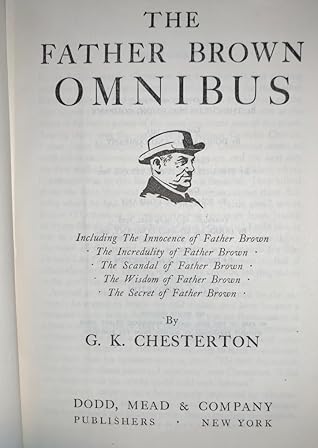
The Father Brown Omnibus
by G.K. Chesterton
The first Father Brown Omnibus with a foreword by R. T. Bond, with a red cloth cover.. This does NOT include “The Vampire of the Village”. The following stories are included, “The Absence of Mr. Glass”, “The Actor and the Alibi”, “The Arrow of Heaven”, “The Blast of the Book”, “The Blue Cross”, “The Chief Mourner of Marne”, “The Crime of the Communist”, “The Curse of the Golden Cross”, “The Dagger with Wings”, “The Doom of the Darnaways”, “The Duel of Dr. Hirsch”, “The Eye of Apollo”, “The Fairy Tale of Father Brown”, “The Flying Stars”, “The Ghost of Gideon Wise”, “The God of the Gongs”, “The Green Man”, “The Hammer of God”, “The Head of Cæsar”, “The Honour of Israel Gow”, “The Insoluble Problem”, “The Invisible Man”, “The Man in the Passage”, “The Man with Two Beards”, “The Miracle of Moon Crescent”, “The Mistake of the Machine”, “The Oracle of the Dog”, “The Paradise of Thieves”, “The Perishing of the Pendragons”, “The Point of a Pin”, “The Purple Wig”, “The Pursuit of Mr. Blue”, “The Queer Feet”, “The Quick One”, “The Red Moon of Meru”, “The Resurrection of Father Brown”, “The Salad of Colonel Cray”, “The Scandal of Father Brown”, “The Secret Garden”, “The Secret of Father Brown”, “The Secret of Flambeau”, “The Sign of the Broken Sword”, “The Sins of Prince Saradine”, “The Song of the Flying Fish”, “The Strange Crime of John Boulnois”, “The Three Tools of Death”, “The Vanishing of Vaudrey”, “The Worst Crime in the World”, “The Wrong Shape”.
BUY NOW
Hardcover, First, 974 pages
Published by Dodd, Mead & Company
Subscribe
Get Bible verse every day in your inbox
Read on Mobile


Group of Brands


© 2026 Bibleportal.com All rights reserved.
Gilbert Keith Chesterton was one of the most influential English writers of the 20th century. His prolific and diverse output included journalism, philosophy, poetry, biography, Christian apologetics, fantasy and detective fiction.
Chesterton has been called the "prince of paradox". Time magazine, in a review of a biography of Chesterton, observed of his writing style: "Whenever possible Chesterton made his points with popular sayings, proverbs, allegories—first carefully turning them inside out.
... Show more