George Fox (July 1624 – 13 January 1691) was an English Dissenter and a founder of the Religious Society of Friends, commonly known as the Quakers or Friends.
The son of a Leicestershire weaver, Fox lived in a time of great social upheaval and war. He rebelled against the religious and political authorities by proposing an unusual and uncompromising approach to the Christian faith. He travelled throughout Britain as a dissenting preacher, for which he was often persecuted by the authorities who disapproved of his beliefs.
In 1669, Fox married Margaret Fell, the widow of one of his wealthier supporters; she was a leading Friend. His ministry expanded and he undertook tours of North America and the Low Countries. Between these tours, he was imprisoned for more than a year. He spent the final decade of his life working in London to organize the expanding Quaker movement.
While his movement attracted disdain from some, others such as William Penn and Oliver Cromwell viewed Fox with respect.

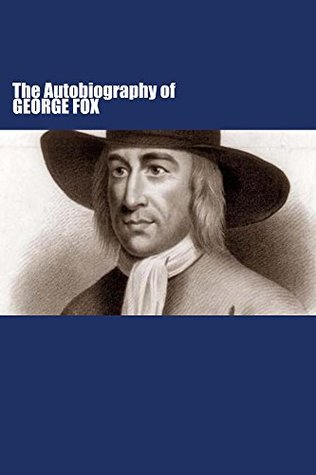


George Fox (1624 - 1691)
Was an English Dissenter and a founder of the Religious Society of Friends, commonly known as the Quakers or Friends. This was a group the Lord started through the ministry of George Fox. God called him apart from all other forms of Christendom in his day because of the lack of Biblical obedience and holiness.The emphasis in George Fox's ministry was firstly prophetic. He called out the people of God to show them that they had the Holy Spirit of God and could be taught of Him and not to solely rely on the teachings of ecclesiastical leaders. Secondly, he spoke directly to many ministers in his day to show them they were hirelings and did not have a true shepherds heart for the people of God rather they were seeking after financial gain.
Founder of the Society of Friends (Quakers). George Fox was born in Drayton-in-the-Clay, Leicestershire, England, the son of Puritan parents. Little is known of his early life, apart from what he wrote in his journal: "In my very young years, I had a gravity and stayedness of mind and spirit not usual in young children. Insomuch that, when I saw old men behave lightly and wantonly toward each other, I had a dislike thereof raise in my heart, and I said within myself, `If ever I come to be a man, surely I shall not do so, nor be so wanton.'"
At the age of 19, he gained deep, personal assurance of his salvation and began to travel as an itinerant preacher, seeking a return to the simple practices of the New Testament. He abhorred technical theology, and preached a faith borne of experience, freshly fed and guided by the immediate presence of the Holy Spirit.
Fox was persecuted almost daily, yet his power of endurance was phenomenal. He was beaten with dogwhips, knocked down with fists and stones, brutally struck with pikestaves, hard beset by mobs, incarcerated eight times in the pestilential jails, prisons, castles and dungeons--yet he went straightforward with his mission as though he had discovered some fresh courage which made him impervious to man's inhumanity.
He undertook as far as possible to let the new life in Christ take its own free course of development in his ministry. He shunned rigid forms and static systems, and for that reason he refused to head a new sect or to start a new denomination, or to begin a new church. He would not build an organization of any kind. His followers at first called themselves "Children of the Light," and later adopted the name "The Society (or Fellowship) of Friends."
Fox preached and traveled for 40 years throughout England, Scotland, Holland, and America. His life demonstrated the truth of his famous saying, "One man raised by God's power to stand and live in the same spirit the apostle and prophets were in, can shake the country for ten miles around."
... Show more