
- Bible
- Read the Bible
- Bible Versions
- Verse of the Day
- Reading Plans
- Verses by Topic
- Books of the Bible
- Bible Images
- Study
- Commentaries
- Concordances
- Dictionaries
- Encyclopedias
- Sermons
- Bible Atlas & Maps
- BP Wiki
- Devotionals
- Today's Devotionals
- Light of the World
- All Devotionals
- Inspirational Quotes
- More
- Picture Quotes
- Videos
- Inspirational
- Bible Study
- What The Bible Says
- Bible Q&As
- Daily Bread
- Bible by Genre
- Bible Stories
- Random Bible Verse
- Community
- Store
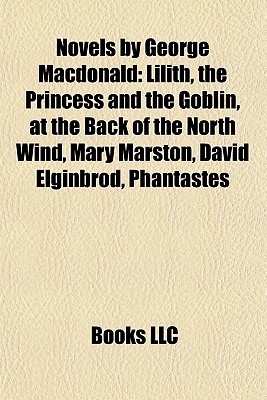
Novels by George Macdonald: Lilith, the Princess and the Goblin, at the Back of the North Wind, Mary Marston, David Elginbrod, Phantastes
by George MacDonald
This is nonfiction commentary. Purchase includes a free trial membership in the publisher's book club where you can select from more than a million books without charge. Chapters: Lilith, the Princess and the Goblin, at the Back of the North Wind, Mary Marston, David Elginbrod, Phantastes, Ranald Bannerman's Boyhood, Alec Forbes of Howglen, What's Mine's Mine, the Day Boy and the Night Girl, the Lost Princess, the Princess and Curdie, Sir Gibbie, the Elect Lady. Source: Wikipedia. Free updates online. Not illustrated. Excerpt: Lilith is a fantasy novel written by Scottish writer George MacDonald and first published in 1895. Its importance was recognized in its later revival in paperback by Ballantine Books as the fifth volume of the celebrated Ballantine Adult Fantasy series in September 1969. Lilith is considered among the darkest of MacDonald's works, and among the most profound. It is a story concerning the nature of life, death and salvation. Many believe that MacDonald is arguing for Christian universalism, or the idea that all will eventually be saved. Mr. Vane, the protagonist of Lilith, owns a library that seems to be haunted by the former librarian, who looks much like a raven from the brief glimpses he catches of the wraith. After finally encountering the supposed ghost, the mysterious Mr. Raven, Vane learns that Raven had known his father; indeed, Vane's father had visited the strange parallel universe from which Raven comes and goes and now resides therein. Vane follows Raven into the world through a mirror (this symbolistic realm is described as "the region of the seven dimensions," a term taken from Jacob Boehme). Inside the world, Vane learns of a house of beds where the dreamers sleep until the end of the world in death: a good death, in which life is found. Vane's grandfather refused to sleep there and is, instead, forced to do battle with skeletons in a haunted wood. After a treacherous journey through a val...More: http: //booksllc.net/?id=88088booksllc.net/?id=88088
BUY NOW
Paperback, 40 pages
Published May 28th 2010 by Books LLC
Subscribe
Get Bible verse every day in your inbox
Read on Mobile


Group of Brands


© 2026 Bibleportal.com All rights reserved.
George MacDonald was a Scottish author, poet, and Christian minister.
Known particularly for his poignant fairy tales and fantasy novels, George MacDonald inspired many authors, such as W. H. Auden, J. R. R. Tolkien, C. S. Lewis, E. Nesbit and Madeleine L'Engle. G. K. Chesterton cited The Princess and the Goblin as a book that had "made a difference to my whole existence."
Even Mark Twain, who initially disliked MacDonald, became friends with him, and there is some evidence that Twain was influenced by MacDonald.
MacDonald grew up influenced by his Congregational Church, with an atmosphere of Calvinism. But MacDonald never felt comfortable with some aspects of Calvinist doctrine; indeed, legend has it that when the doctrine of predestination was first explained to him, he burst into tears (although assured that he was one of the elect). Later novels, such as Robert Falconer and Lilith, show a distaste for the idea that God's electing love is limited to some and denied to others.
... Show more