
- Bible
- Read the Bible
- Bible Versions
- Verse of the Day
- Reading Plans
- Verses by Topic
- Books of the Bible
- Bible Images
- Study
- Commentaries
- Concordances
- Dictionaries
- Encyclopedias
- Sermons
- Bible Atlas & Maps
- BP Wiki
- Devotionals
- Today's Devotionals
- Light of the World
- All Devotionals
- Inspirational Quotes
- More
- Picture Quotes
- Videos
- Inspirational
- Bible Study
- What The Bible Says
- Bible Q&As
- Daily Bread
- Bible by Genre
- Bible Stories
- Random Bible Verse
- Community
- Store
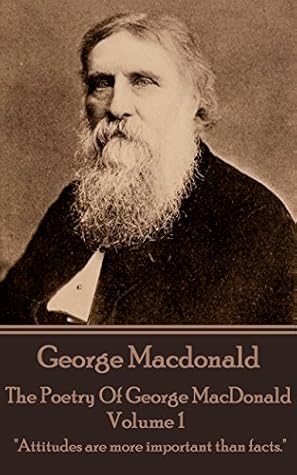
The Poetry Of George MacDonald - Volume 1: "Attitudes are more important than facts."
George MacDonald was born on December 10th 1824 at Huntly, Aberdeenshire, Scotland where he grew up with the Congregational Church, with its atmosphere of Calvinism to which George never really attached himself. His mother when he was only 8 and by 16 George was successful in obtaining a bursary to King’s College in Aberdeen and from which he also received his M.A. In 1846 George had his first poem published anonymously. By 1848 he was attending Highbury Theological College to study for the Congregational ministry and also engaged to Louisa Powell. By 1850 George was appointed as the pastor of Trinity Congregational Church in Arundel. Later that year he suffered his first severe haemorrhage in what was to become a lifelong battle with declining health. In his ministry his sermons were at odds with the Church and their more segmented views. Three years later he resigned from the pulpit. His collection of poems ‘Within and Without’ was published in 1855 and in 1858 so too was ‘Phantastes’. His career would now flourish and along with very successful lecture tours were published such classics as ‘At the Back of the North Wind’, ‘Wilfrid Cumbermede’, ‘The Princess and the Goblin’ and ‘Exotics’. From 1880 he and his family moved to Bordighera on the Riviera dei Fiori in Liguria, Italy, where he spent 20 years writing. But ill health continued to strike at him. By 1898 a stroke had taken his voice. In 1901 George and Louisa were able to celebrate their Golden Wedding anniversary though sadly Louisa was to pass away on January 13th, 1902 whilst at Bordighera. On 18th September 1905 George MacDonald died at Sagamore, Ashtead in Surrey. He was cremated and his ashes buried at Bordighera, in the English cemetery, along with his wife Louisa and daughters Lilia and Grace.
George MacDonald was born on December 10th 1824 at Huntly, Aberdeenshire, Scotland where he grew up with the Congregational Church, with its atmosphere of Calvinism to which George never really attached himself. His mother when he was only 8 and by 16 George was successful in obtaining a bursary to King’s College in Aberdeen and from which he also received his M.A. In 1846 George had his first poem published anonymously. By 1848 he was attending Highbury Theological College to study for the Congregational ministry and also engaged to Louisa Powell. By 1850 George was appointed as the pastor of Trinity Congregational Church in Arundel. Later that year he suffered his first severe haemorrhage in what was to become a lifelong battle with declining health. In his ministry his sermons were at odds with the Church and their more segmented views. Three years later he resigned from the pulpit. His collection of poems ‘Within and Without’ was published in 1855 and in 1858 so too was ‘Phantastes’. His career would now flourish and along with very successful lecture tours were published such classics as ‘At the Back of the North Wind’, ‘Wilfrid Cumbermede’, ‘The Princess and the Goblin’ and ‘Exotics’. From 1880 he and his family moved to Bordighera on the Riviera dei Fiori in Liguria, Italy, where he spent 20 years writing. But ill health continued to strike at him. By 1898 a stroke had taken his voice. In 1901 George and Louisa were able to celebrate their Golden Wedding anniversary though sadly Louisa was to pass away on January 13th, 1902 whilst at Bordighera. On 18th September 1905 George MacDonald died at Sagamore, Ashtead in Surrey. He was cremated and his ashes buried at Bordighera, in the English cemetery, along with his wife Louisa and daughters Lilia and Grace.BUY NOW
Published December 15th 2014 by Portable Poetry
Get Bible verse every day in your inbox
Read on Mobile


Group of Brands


George MacDonald was a Scottish author, poet, and Christian minister.
Known particularly for his poignant fairy tales and fantasy novels, George MacDonald inspired many authors, such as W. H. Auden, J. R. R. Tolkien, C. S. Lewis, E. Nesbit and Madeleine L'Engle. G. K. Chesterton cited The Princess and the Goblin as a book that had "made a difference to my whole existence."
Even Mark Twain, who initially disliked MacDonald, became friends with him, and there is some evidence that Twain was influenced by MacDonald.
MacDonald grew up influenced by his Congregational Church, with an atmosphere of Calvinism. But MacDonald never felt comfortable with some aspects of Calvinist doctrine; indeed, legend has it that when the doctrine of predestination was first explained to him, he burst into tears (although assured that he was one of the elect). Later novels, such as Robert Falconer and Lilith, show a distaste for the idea that God's electing love is limited to some and denied to others.
... Show more