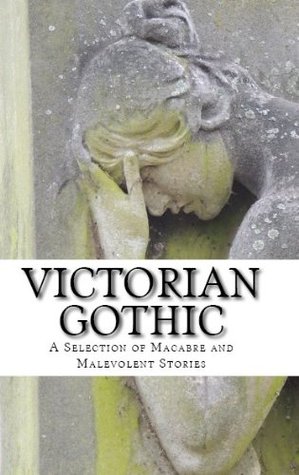
In his groundbreaking book 'Inventing the Victorians', Mathew Sweet argues that, for all their obsessions and the straitlaced prudery which we associate with them, our Victorian forefathers were essentially the same as us. This may be partly true in terms of their social aspirations and their consumerism, but it is also fair to say that they were very much obsessed with death and funerary monuments. The twenty-first century reader need only visit cemeteries like Highgate and Kensal Green to realise that our nineteenth-century forerunners were fascinated by the "undiscovered country from whose bourn no traveller returns," going as far as creating entire stone-hewn necropolises for their dead. In this anthology we bring together some of the finest Victorian writings on death and the supernatural from the pens of both well-known luminaries like Dickens or Thackeray and lesser-known authors like George MacDonald and Mrs Henry Wood. It is to be hoped that by reading these stories the modern reader will be able to gain an insight into the morbid peculiarities of the Victorian mind.



George MacDonald was a Scottish author, poet, and Christian minister.
Known particularly for his poignant fairy tales and fantasy novels, George MacDonald inspired many authors, such as W. H. Auden, J. R. R. Tolkien, C. S. Lewis, E. Nesbit and Madeleine L'Engle. G. K. Chesterton cited The Princess and the Goblin as a book that had "made a difference to my whole existence."
Even Mark Twain, who initially disliked MacDonald, became friends with him, and there is some evidence that Twain was influenced by MacDonald.
MacDonald grew up influenced by his Congregational Church, with an atmosphere of Calvinism. But MacDonald never felt comfortable with some aspects of Calvinist doctrine; indeed, legend has it that when the doctrine of predestination was first explained to him, he burst into tears (although assured that he was one of the elect). Later novels, such as Robert Falconer and Lilith, show a distaste for the idea that God's electing love is limited to some and denied to others.
... Show more