
- Bible
- Read the Bible
- Bible Versions
- Verse of the Day
- Reading Plans
- Verses by Topic
- Books of the Bible
- Bible Images
- Study
- Commentaries
- Concordances
- Dictionaries
- Encyclopedias
- Sermons
- Bible Atlas & Maps
- BP Wiki
- Devotionals
- Today's Devotionals
- Light of the World
- All Devotionals
- Inspirational Quotes
- More
- Picture Quotes
- Videos
- Inspirational
- Bible Study
- What The Bible Says
- Bible Q&As
- Daily Bread
- Bible by Genre
- Bible Stories
- Random Bible Verse
- Community
- Store
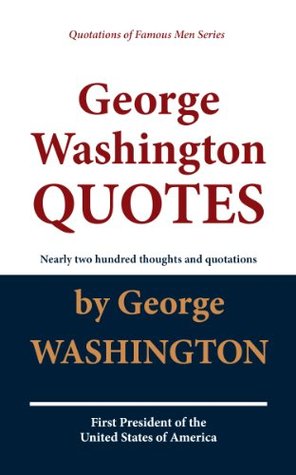
George Washington QUOTES (Quotations of Famous Men Series)
by George Washington
Born in 1732 into a Virginia planter family, George Washington learned the morals, manners, and body of knowledge requisite for an 18th century Virginia gentleman. As a young man he worked as a surveyor and also saw some action in the French and Indian War while pursuing his twin interests: military arts and western expansion.
After his marriage to Martha Dandridge Custis, Washington devoted himself to a busy and happy life. But like his fellow planters, he felt himself exploited by British merchants and hampered by British regulations. As the quarrel with the mother country grew acute, Washington moderately but firmly voiced his resistance to the restrictions. Eventually, he took command of the ill-trained troops of the Continental Army, embarking on a war that was to last six grueling years.
He realized early that the best strategy was to harass the British. Ensuing battles saw Washington often fall back slowly, then strike unexpectedly. Finally in 1781 with the aid of French allies—he forced the surrender of Cornwallis at Yorktown.
Though he longed to retire to his fields at Mount Vernon, Washington realized that the political structure of the new nation was not functioning well. After becoming a prime mover in the steps leading to the Constitutional Convention at Philadelphia in 1787, Washington was unanimously elected as the first President of the United States. He served two terms as president, but unfortunately, got to enjoy his retirement for less than three years. After his death from a throat infection in 1799, the nation mourned him for months.
George Washington's significance cannot be overstated. In addition to leading the Continental Army to victory over the British, his belief in a strong federal government greatly influenced the nation during his two presidential terms. Refusing to allow others to raise the president to the level of “royalty,” he insisted on working on the principle of merit. His warning against foreign entanglements was heeded by future presidents and, by declining a third term, he set up the precedent of a two-term limit.
In his private life, George Washington led by example. His plantation, Mount Vernon, was on the cutting edge for its time as he strove to make it a model of science-based agriculture in order to benefit other farmers. Washington experimented with crops and fertilizers and continually sought the best innovations. As a businessman, he took advantage of the opportunities provided by his environment, eventually running flourishing fisheries, a gristmill, and the largest distillery in the country.
In addition to acting as a surrogate father for several generations of young people, he served for years on the vestry of his church. Among the last acts of his life, Washington tried to influence others, as he made provisions in his will to free all the slaves who belonged to him. During his lifetime he wrote numerous letters, from which are drawn this collection of wisdom containing nearly 200 of his best admonitions, sayings, and quotes.
After his marriage to Martha Dandridge Custis, Washington devoted himself to a busy and happy life. But like his fellow planters, he felt himself exploited by British merchants and hampered by British regulations. As the quarrel with the mother country grew acute, Washington moderately but firmly voiced his resistance to the restrictions. Eventually, he took command of the ill-trained troops of the Continental Army, embarking on a war that was to last six grueling years.
He realized early that the best strategy was to harass the British. Ensuing battles saw Washington often fall back slowly, then strike unexpectedly. Finally in 1781 with the aid of French allies—he forced the surrender of Cornwallis at Yorktown.
Though he longed to retire to his fields at Mount Vernon, Washington realized that the political structure of the new nation was not functioning well. After becoming a prime mover in the steps leading to the Constitutional Convention at Philadelphia in 1787, Washington was unanimously elected as the first President of the United States. He served two terms as president, but unfortunately, got to enjoy his retirement for less than three years. After his death from a throat infection in 1799, the nation mourned him for months.
George Washington's significance cannot be overstated. In addition to leading the Continental Army to victory over the British, his belief in a strong federal government greatly influenced the nation during his two presidential terms. Refusing to allow others to raise the president to the level of “royalty,” he insisted on working on the principle of merit. His warning against foreign entanglements was heeded by future presidents and, by declining a third term, he set up the precedent of a two-term limit.
In his private life, George Washington led by example. His plantation, Mount Vernon, was on the cutting edge for its time as he strove to make it a model of science-based agriculture in order to benefit other farmers. Washington experimented with crops and fertilizers and continually sought the best innovations. As a businessman, he took advantage of the opportunities provided by his environment, eventually running flourishing fisheries, a gristmill, and the largest distillery in the country.
In addition to acting as a surrogate father for several generations of young people, he served for years on the vestry of his church. Among the last acts of his life, Washington tried to influence others, as he made provisions in his will to free all the slaves who belonged to him. During his lifetime he wrote numerous letters, from which are drawn this collection of wisdom containing nearly 200 of his best admonitions, sayings, and quotes.
BUY NOW
Kindle Edition, 25 pages
Published April 12th 2012
Subscribe
Get Bible verse every day in your inbox
Read on Mobile


Group of Brands


© 2026 Bibleportal.com All rights reserved.
George Washington was the commander of the Continental Army in the American Revolutionary War (1775-1783) and served as the first President of the United States of America (1789-1797). For his central role in the formation of the United States, he is often referred to as the father of his country.
Washington was baptized into the Church of England. In 1765, when the Church of England was still the state religion, he served on the vestry (lay council) for his local church. Throughout his life, he spoke of the value of righteousness, and of seeking and offering thanks for the "blessings of Heaven."
The Electoral College elected Washington unanimously in 1789, and again in the 1792 election; he remains the only president to receive 100% of the electoral votes.
Washington proved an able administrator. An excellent delegator and judge of talent and character, he held regular cabinet meetings to debate issues before making a final decision. In handling routine tasks, he was "systematic, orderly, energetic, solicitous of the opinion of others but decisive, intent upon general goals and the consistency of particular actions with them.
Washington died in 1799. He has been consistently ranked by scholars as one of the greatest U.S. Presidents.
... Show more