This thoroughly edited collection gives a complete insight into the life and legacy of the first American President, George Washington. The work of George Washington presented in this book covers both his military carrier (Journals and Orders from the Revolutionary war) and his presidency (Inaugural Addresses, State of the Union Addresses, Messages to Congress and more). Finally, this collection sheds light to the private life of Washington through his personal correspondence. The edition includes the biography of George Washington and further insight in his writings, works and legacy.
Contents:
The Life of George Washington
Journal of My Journey Over the Mountains
The Journal of Major George Washington: Sent by the Hon. Robert Dinwiddie to the Commandant of the French Forces in Ohio
George Washington's Rules of Civility
George Washington in Revolutionary War
George Washington's Remarks About the French and Indian War
Inaugural Addresses
State of the Union Addresses
Messages to Congress
Washington's Masonic Correspondence
Letters of George Washington
Farewell Address
Last Will and Testament

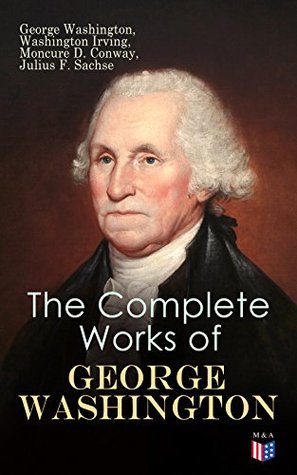


George Washington was the commander of the Continental Army in the American Revolutionary War (1775-1783) and served as the first President of the United States of America (1789-1797). For his central role in the formation of the United States, he is often referred to as the father of his country.
Washington was baptized into the Church of England. In 1765, when the Church of England was still the state religion, he served on the vestry (lay council) for his local church. Throughout his life, he spoke of the value of righteousness, and of seeking and offering thanks for the "blessings of Heaven."
The Electoral College elected Washington unanimously in 1789, and again in the 1792 election; he remains the only president to receive 100% of the electoral votes.
Washington proved an able administrator. An excellent delegator and judge of talent and character, he held regular cabinet meetings to debate issues before making a final decision. In handling routine tasks, he was "systematic, orderly, energetic, solicitous of the opinion of others but decisive, intent upon general goals and the consistency of particular actions with them.
Washington died in 1799. He has been consistently ranked by scholars as one of the greatest U.S. Presidents.
... Show more